
WooCommerce vs Shopify for Custom Workflows: A Developer’s View

Business owners rarely struggle with launching an online store. Modern platforms make that part accessible. The real friction begins later, when growth introduces complexity. Pricing rules become layered. Fulfillment expands across locations. Subscriptions evolve. B2B logic enters the mix. ERP systems must synchronize cleanly. At that stage, the question is no longer which platform looks […]
When to Replace Shopify Apps with Custom Development

For most brands, Shopify apps are the fastest way to unlock functionality. You install, configure, and move on. In early growth stages, this speed is exactly what you need. But as stores mature, complexity compounds. What started as a handful of helpful tools can quietly become an unstable stack of overlapping logic, duplicated scripts, and […]
Shopify AI Integrations: Practical Use Cases That Actually Work
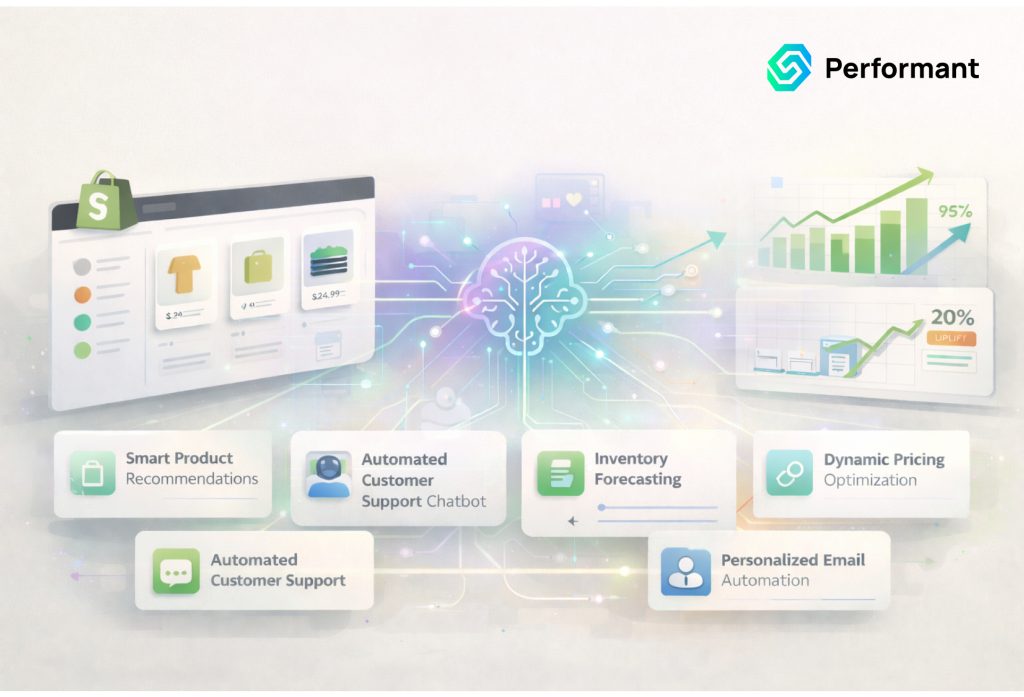
Artificial intelligence only becomes valuable in commerce when it is attached to a real workflow. It is not valuable because it writes clever product descriptions in a demo or generates impressive predictions on a slide. For founders building and scaling on Shopify, especially those working with a reliable Shopify development company, AI matters when it […]
Why Page Builders Hurt Shopify Performance More Than You Think
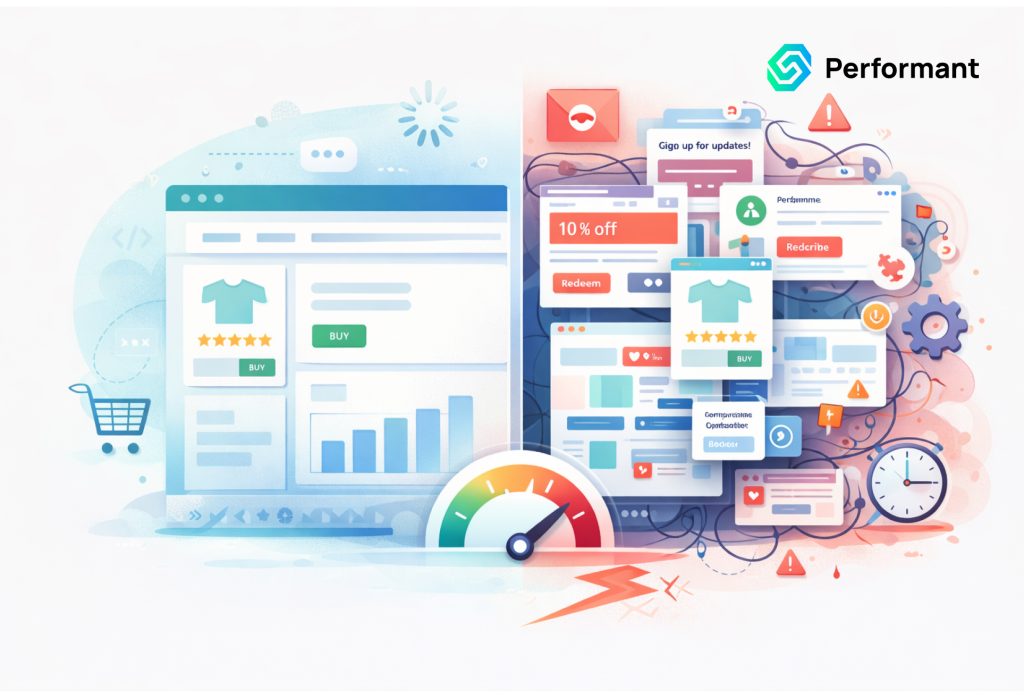
If you’re a founder using a shopify page builder to launch campaigns faster, you’re not wrong. They feel efficient. Marketing can move without Shopify developers. Landing pages ship in hours instead of weeks. But here’s the uncomfortable truth: Performance loss is a margin tax. Every extra second your store takes to load quietly increases acquisition […]
Shopify Store Audit Checklist for Founders Preparing to Scale
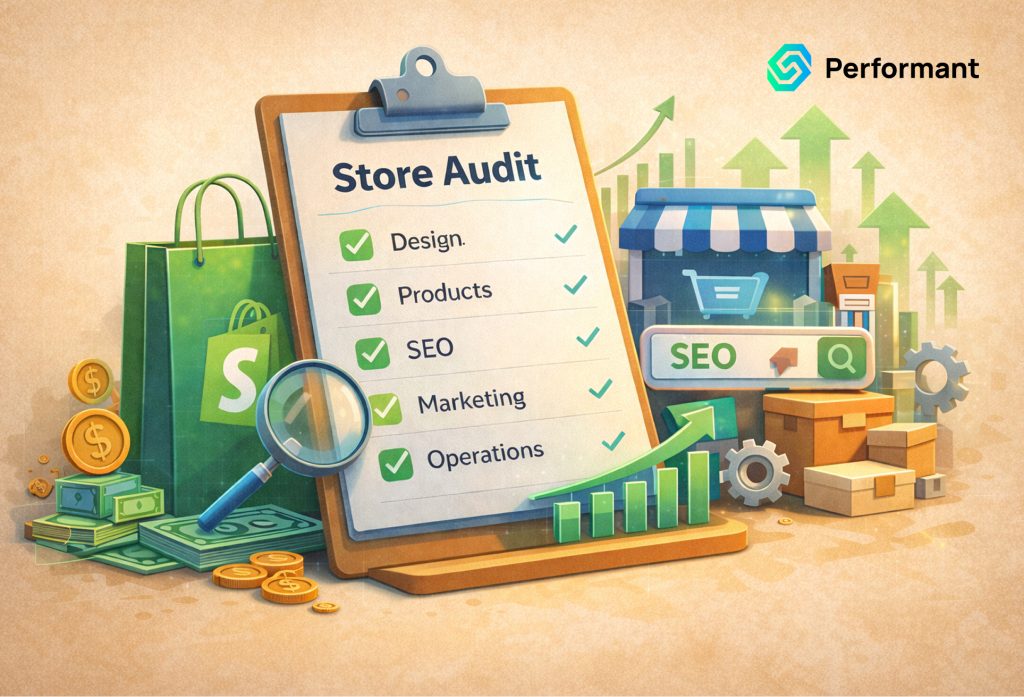
If you’re preparing to scale paid media, raise capital, or expand into new markets, your biggest risk is not competition. It’s your own infrastructure. I’ve seen founders double ad budgets only to discover: When you increase traffic, you increase pressure. Every hidden flaw inside your store gets amplified. A proper Shopify store audit is not […]
Shopify API Rate Limits: Hidden Bottlenecks for Growing Stores
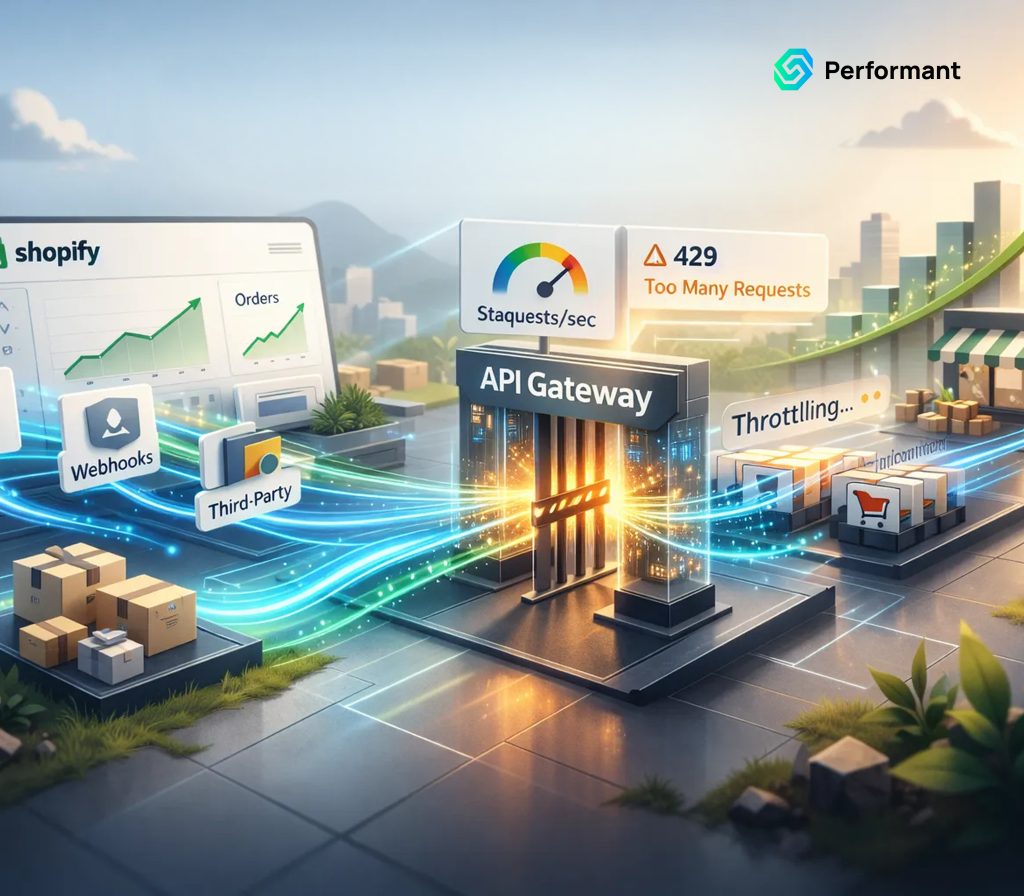
Most Shopify stores never think about API limits until integrations start failing. Orders stop syncing to your ERP. Inventory updates lag behind reality. Fulfillment systems process orders late. Analytics dashboards show stale data. Support teams manually fix inconsistencies without understanding the root cause. At first glance, everything appears normal. Shopify is working. Apps are connected. […]
Shopify Dropshipping Infrastructure: What Breaks First at Scale

Dropshipping looks simple when you’re processing 5-20 orders per day. Products sync automatically. Tracking numbers update. Customers receive orders without intervention. Everything feels automated. But as shopify dropshipping operations scale to hundreds or thousands of orders per day, small inconsistencies turn into operational failures. Orders stop syncing. Inventory becomes inaccurate. Tracking updates fail. Customer support […]
Shopify Metafields at Scale: Best Practices for Complex Catalogs

Complex Shopify catalogs rarely fail because Shopify lacks features. They fail because the data model underneath them becomes unmanageable. From the outside, the symptoms look familiar. Filters stop working correctly. Product pages show inconsistent information. Merchandising workflows slow down. Bulk edits become risky. Theme updates break unexpected areas. Most teams assume these are theme or […]
Handling High-Volume Orders on Shopify Without System Failures
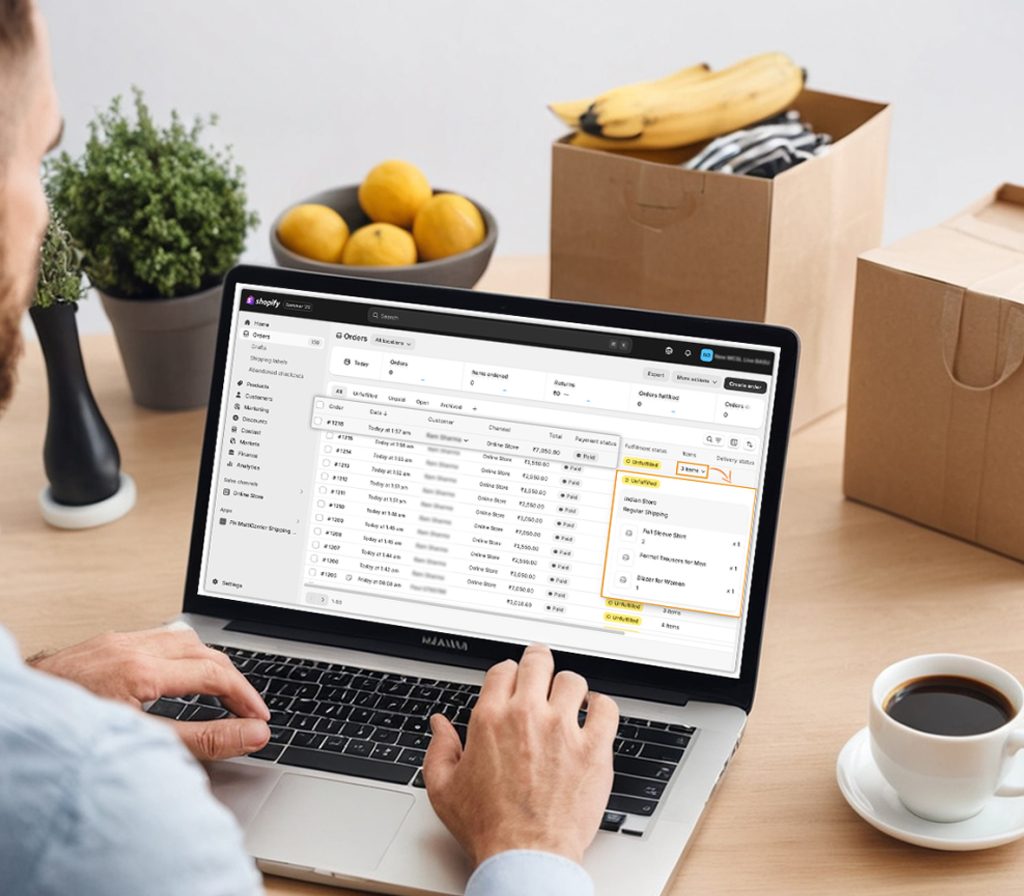
Growth exposes operational truth. At low order volume, systems appear stable because stress is low. Orders flow through dashboards. Inventory updates manually. Fulfillment teams keep up. Customer support responds in real time. Then a flash sale hits. Suddenly, orders spike 10× in minutes. Inventory sells faster than systems update. Fulfillment pipelines fall behind. Customers receive […]
Shopify Webhooks Explained: Real-World Use Cases for Scaling Stores

Growth changes everything. At low volume, Shopify operations can run on dashboards, manual checks, and app notifications. Orders come in. Teams respond. Issues get fixed reactively. At scale, that breaks. High-volume stores need systems that respond instantly and automatically to what’s happening inside the platform. Orders. Refunds. Inventory changes. Customer updates. Fraud flags. That’s where […]