
How to Migrate to Shopify Without Losing Revenue, SEO, or Customer Data
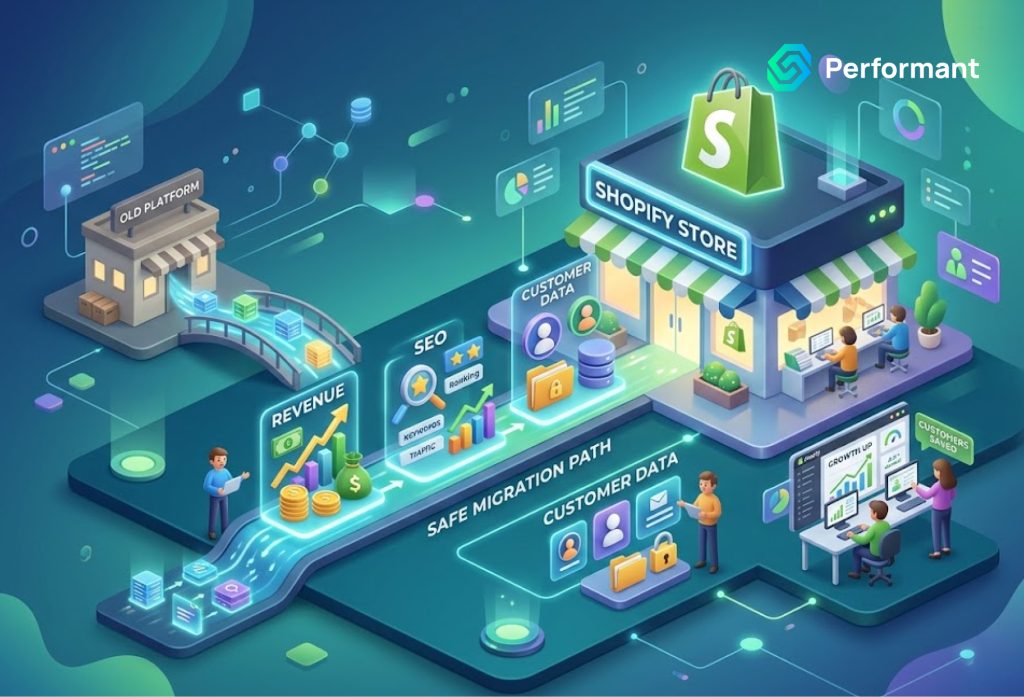
The Stakes of Getting This Right There is no neutral outcome in a platform migration. You either execute it with enough precision to preserve what you have built your search rankings, your customer relationships, your conversion performance or you absorb losses that can take months or years to fully recover. For business owners considering a move to Shopify, that reality deserves to sit at the center of every decision made throughout the process, often supported by experienced shopify development service providers who understand the stakes. The appeal of Shopify is well-founded. Its managed infrastructure removes the hosting and maintenance burden that weighs on self-hosted platforms. Its ecosystem of tools, payment infrastructure, and third-party integrations is mature and well-supported. Its performance characteristics, particularly for mobile commerce, are strong. For businesses that have outgrown the operational complexity of their current platform, Shopify represents a genuinely superior operating environment. But arriving there without damage requires something that the platform itself cannot provide: a disciplined migration process built around protecting the three things that define your store’s commercial health: your organic search traffic, your customer data, and your revenue continuity. This article is a structured guide to that process, written for business owners who understand that the quality of this transition determines the quality of what comes after it. Before You Begin: The Assessment Phase Most Businesses Skip The most consequential work in a Shopify migration happens before a single piece of data is moved. It happens in the assessment phase, where the full scope and complexity of what needs to be migrated is documented, analyzed, and planned for. Business owners who skip or rush this phase invariably discover its importance later at a moment when the cost of discovery is far higher. A thorough pre-migration assessment covers four distinct areas. The first is your current platform’s technical inventory. Every URL, every data structure, every third-party integration, every custom functionality, and every piece of content that lives on your current store needs to be catalogued. This is not a casual exercise. It requires crawling your entire site to capture the full URL map, auditing your plugin or extension stack to document what each component does and how it affects your data, and identifying any customizations that diverge from the platform’s standard behavior. What you discover in this inventory defines the scope of the migration project. The second area is your SEO profile. Which pages on your current store generate organic search traffic? Which carry inbound links from external websites? Which rank for keywords that drive qualified visitors? The answers to these questions need to be pulled from Google Search Console and your analytics platform before migration begins. This data becomes the baseline against which post-migration performance is measured and it identifies precisely which pages and URL structures need to be protected through the redirect strategy. The third area is your customer data structure. How is customer information currently stored? What fields exist beyond standard name, email, and address data? What is the state of your order history, and how does it associate with customer records? For businesses whose current platform was built or significantly customized through professional Shopify development services or equivalent expertise, the data structure may be considerably more complex than the standard platform schema and that complexity needs to be understood before migration planning can be credible. The fourth area is your integration map. Every system that connects to your current store, your email marketing platform, your ERP, your accounting software, your CRM, your shipping carrier integrations, your loyalty program needs to be documented with its current configuration, and its Shopify equivalent or replacement needs to be identified. Gaps discovered here become items on the migration plan, not surprises after launch. Protecting Your SEO: The Technical Foundation Search engine optimization built over years is one of the most fragile assets in a platform migration. It is intangible, it is not exported in any data file, and it can be significantly damaged by technical decisions that look inconsequential to someone who does not fully understand how search engines evaluate and rank pages. The core of SEO protection in a Shopify migration is URL management. Every platform has its own URL structure, and Shopify’s is different from virtually every other major eCommerce platform. Shopify enforces specific URL patterns /products/ for product pages, /collections/ for category pages, /pages/ for static content pages, /blogs/ for editorial content. If your current platform uses different URL structures, every page that changes its URL needs a 301 redirect pointing from the old URL to the new one. A 301 redirect signals to search engines that a page has permanently moved to a new address. It transfers the majority of the ranking authority accumulated at the old URL to the new one. Without it, that authority is abandoned. The old URL returns a 404 error, any inbound links pointing to it become dead ends, and the search engine treats the new URL as a brand-new page with no history. For a page that has been ranking on the first page of Google for a competitive keyword, that is a significant commercial loss. Redirect implementation at the scale of a full site migration requires a systematic approach. Your pre-migration URL crawl provides the source list. Your Shopify URL structure provides the destination list. Mapping one to the other, verifying the logic of each redirect, testing every redirect before go-live, and monitoring for redirect errors in Google Search Console after launch is the workflow. It is methodical, it is time-intensive, and there is no shortcut that produces equivalent results. Beyond redirects, metadata preservation is critical. Every title tag and meta description that contributes to a page’s click-through rate from search results needs to be migrated accurately to the corresponding Shopify page. Auto-generated metadata based on product titles and default templates is not a substitute for the carefully crafted metadata that has been refined over time to maximize search visibility. The migration plan needs to include explicit steps for metadata transfer and
Custom Shopify Development vs. Off-the-Shelf Apps: What Business Owners Must Know
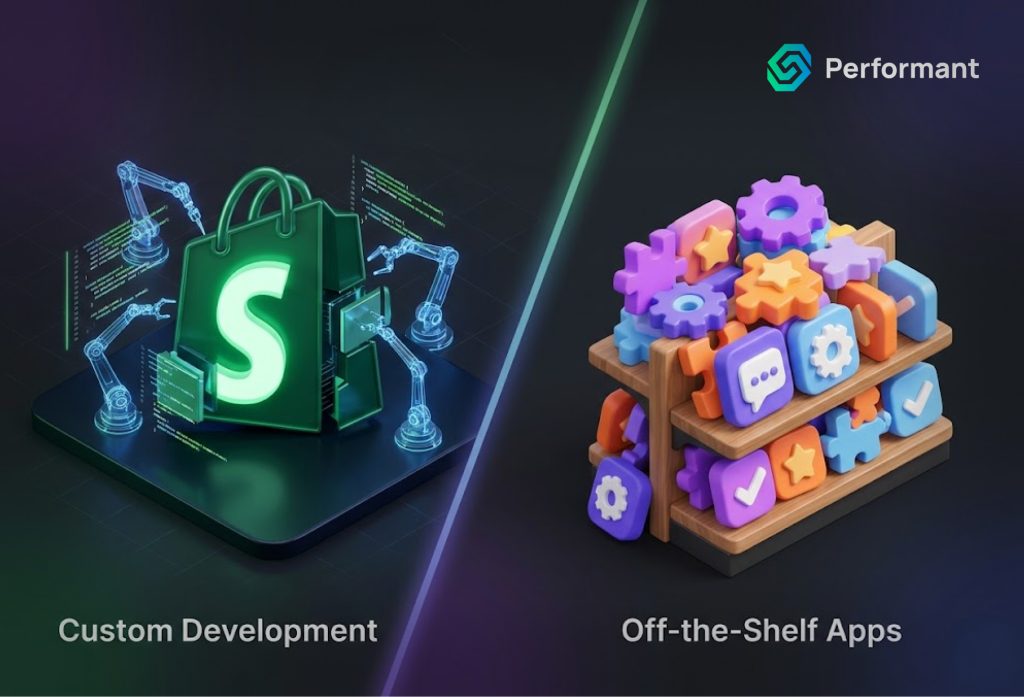
The Decision That Shapes Your Store’s Ceiling Every Shopify business owner reaches a point where the platform’s default capabilities feel insufficient. A feature you need does not exist natively. A workflow your operations require cannot be automated. A customer experience you want to deliver is not possible with your current setup. The question that follows is one of the most consequential you will make for your store’s technical future: do you install an app, or do you build a custom solution, often through a trusted shopify development service? On the surface, this looks like a simple cost-versus-convenience trade-off. In practice, it is a strategic decision that shapes your store’s performance, scalability, operational efficiency, and ultimately, its competitive ceiling. Business owners who understand this distinction make better technology investments. Those who do not tend to accumulate a growing stack of apps that conflict with each other, slow their store, inflate their monthly costs, and still fail to do exactly what the business needs. This article lays out the full picture of what off-the-shelf apps genuinely offer, where they fall short, what custom development actually involves, and how to think about which approach is right for your specific situation at your specific stage of growth. What Off-the-Shelf Apps Are Built to Do The Shopify App Store contains over ten thousand applications covering virtually every conceivable eCommerce function reviews, loyalty programs, subscriptions, upsells, shipping automation, inventory management, email capture, size guides, currency conversion, and hundreds of categories beyond these. For most standard use cases, particularly in the early stages of a store’s growth, these apps solve real problems quickly and affordably. The fundamental design principle behind off-the-shelf apps is scale. A developer builds a single solution and sells it to thousands of merchants. Because the development cost is distributed across a large user base, the per-merchant price is low. A subscription review app that might cost $30 a month to license represents a product that costs its developer tens of thousands of dollars to build. You are accessing that functionality at a fraction of its actual development cost. This is a genuine advantage, and it should not be dismissed. For a store generating $20,000 a month in revenue, installing a $29 loyalty app that drives meaningful repeat purchase behavior is an entirely rational decision. The economics work clearly in favor of the app. The limitations, however, are structural rather than incidental. Off-the-shelf apps are built to serve the broadest possible market, which means they are designed around the most common use cases, not your specific one. When your business requirements diverge from the common case and as you grow, they increasingly will meet the app’s constraints. Where App-Based Solutions Begin to Break Down The Performance Cost Is Real and Compounding Every Shopify app you install has the potential to add code to your storefront. Review widgets, chat tools, loyalty interfaces, and upsell modules all inject JavaScript and CSS into your theme files. Individually, the performance impact of any single well-built app is manageable. Collectively, across a store running eight, ten, or twelve apps simultaneously, the cumulative effect on page load time can be severe. This matters commercially in ways that are directly measurable. Google’s research consistently demonstrates that mobile page load time has a direct and significant relationship with conversion rate. A store loading in two seconds converts meaningfully better than the same store loading in four seconds. Every additional render-blocking script added by an app installation is a small tax on your conversion rate and those taxes compound silently as your app stack grows. Custom development, by contrast, builds functionality directly into your theme or as tightly integrated backend logic, without the bloated generic code that consumer-facing apps carry to accommodate thousands of different merchant configurations. A custom-built loyalty module does exactly what your store needs and nothing else. It loads faster, integrates more cleanly, and does not conflict with other parts of your codebase. App Conflicts Are an Underappreciated Risk When multiple apps modify the same theme files as many loyalty, upsell, cart, and review apps do, the risk of conflict grows with each addition. One app’s JavaScript interferes with another’s. A cart modification made by your subscription app breaks the behavior expected by your upsell app. A theme update resolves one conflict and introduces another. Diagnosing these conflicts is time-consuming, and the solution is rarely elegant when it involves reconciling code written by different development teams for different purposes. This is not a theoretical risk. It is one of the most common technical complaints among scaling Shopify merchants, and it is almost entirely avoidable with a well-architected custom development approach where a single team owns the full codebase and is accountable for how all components interact. Customization Has a Hard Ceiling Off-the-shelf apps offer settings panels with configuration options. They do not offer genuine customization. You can adjust what the developer anticipated a merchant might want to adjust. You cannot change the fundamental logic, the data structure, the user interface beyond preset options, or the integration behavior beyond what the app’s API exposes. For a business with standard needs, this ceiling is high enough. For a business with a differentiated model, a complex B2B pricing structure, a bespoke subscription logic, a loyalty program tied to specific behavioral triggers, a product configurator with unique rules the ceiling is reached quickly, and the frustration that follows is significant. You have invested in a tool that almost does what you need, and “almost” in eCommerce is a word that costs revenue. What Custom Shopify Development Actually Provides Custom development is not simply “the expensive version” of an app. It is a fundamentally different approach to building store functionality, one that begins with your business requirements rather than a pre-existing feature set. When you engage professional Shopify development services to build a custom solution, the process starts with understanding how your business actually operates. What does your checkout flow need to handle? How does your pricing logic work? What data does your team
Fix Broken Shopify Theme After Update: What Business Owners Need to Know
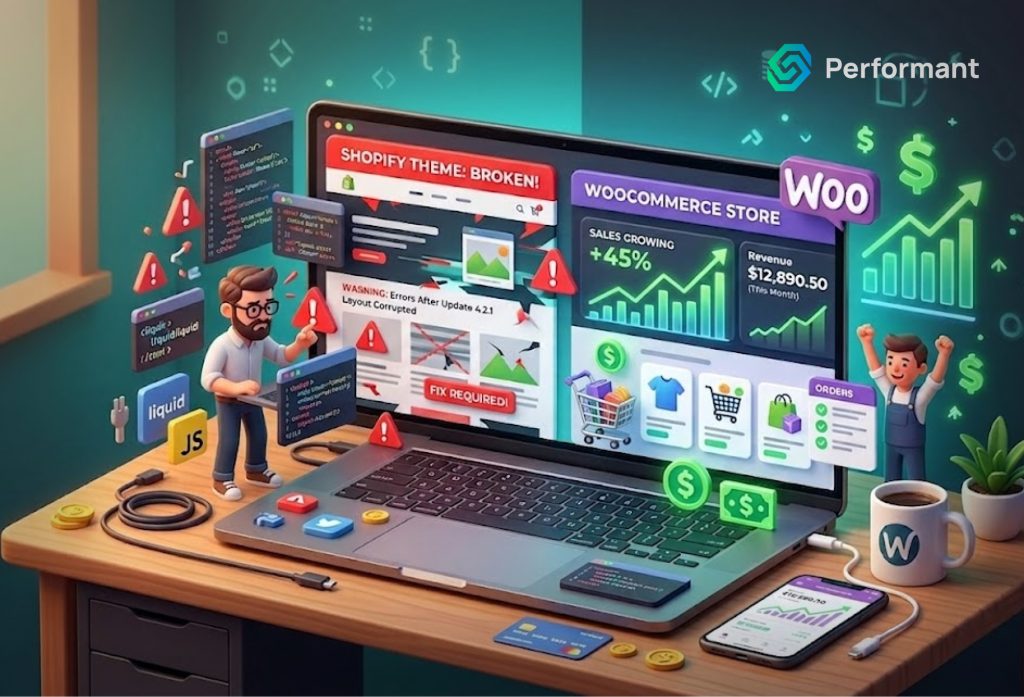
There is a particular kind of frustration reserved for the moment you realize your Shopify store is broken not because of anything you did wrong, but because of something that was supposed to make it better. A theme update pushed through, a Shopify platform change rolled out, and suddenly your homepage layout has collapsed, your navigation menu has disappeared, your product pages look nothing like they did yesterday, or worse, your checkout flow is throwing errors. For business owners, this is not an abstract technical problem. Every hour your storefront is visually broken or functionally impaired is an hour you are losing conversions. Customers who encounter a poorly rendered page do not wait around for it to be fixed. They leave, and in most cases, they do not come back. This article addresses the full picture: why Shopify themes break after updates, what the most common failure patterns look like, how to approach diagnosis intelligently, and when the situation calls for professional Shopify development services rather than an attempted self-repair that risks compounding the damage. Understanding Why Shopify Theme Updates Break Things To make informed decisions about how to respond when a theme breaks, it helps to understand why it happens. The reasons fall into several distinct categories, and knowing which one applies to your situation determines the appropriate response. Platform-Level Changes From Shopify Itself Shopify is a living platform. It is continuously updated, improving performance, introducing new commerce features, deprecating old APIs, and advancing its underlying technology stack. When Shopify introduced Online Store 2.0 as its new theme architecture, for example, stores running older themes suddenly found themselves on a fundamentally different platform than the one their themes were designed for. Features that relied on deprecated Liquid template syntax stopped rendering correctly. Metafield integrations that worked under the old system required rebuilding. These platform transitions are not failures on Shopify’s part; they represent genuine progress. But they create real operational risk for businesses running customized or older themes that have not been maintained to keep pace with platform evolution. If your theme was built two or three years ago and has not been actively updated, a Shopify platform release can expose that technical debt instantly and visibly. Theme Developer Updates That Conflict With Your Customizations If you are running a purchased theme from the Shopify Theme Store Debut, Dawn, Impulse, Turbo, or any of the dozens of popular commercial options that theme receives periodic updates from its developer. Those updates might fix bugs, improve mobile performance, add new section types, or maintain compatibility with Shopify’s evolving codebase. In principle, this is a good thing. In practice, however, accepting a theme update without understanding what it changes is one of the most reliable ways to break a store that has been customized. When a developer’s theme update overwrites template files, stylesheet sections, or JavaScript modules that your development team modified, your customizations are erased. The update installs cleanly because it is technically valid code but your store no longer looks or functions the way your business requires. This is one of the core arguments for working with professional Shopify development services that maintain proper version control and change documentation for every customization made to your theme. Without that infrastructure, each theme update becomes a gamble. App Conflicts Triggered by Theme Changes The average Shopify store runs between six and fifteen installed apps. Many of those apps inject code directly into your theme files adding review widgets, loyalty program interfaces, upsell modules, custom cart drawers, or shipping calculators. When a theme update modifies the template files those apps depend on, the injected code may lose its anchor points, generate JavaScript errors, or render in the wrong place entirely. The resulting breakage can be bewildering because it is not immediately obvious that an app conflict is the cause. A layout that looks fine on desktop but collapses on mobile, a cart drawer that no longer opens, a product page that loads slowly or partially these symptoms can all trace back to a conflict between an updated theme and an app that has not been updated to match. Diagnosing this correctly requires methodical testing, not guesswork. The Most Common Types of Post-Update Breakage Understanding the failure pattern helps prioritize the repair. Post-update theme breakage in Shopify tends to manifest in several recognizable ways. Layout and visual breakage is the most immediately obvious. Sections that should stack vertically now overlap. Fonts have reverted to browser defaults because a stylesheet reference was lost. Images that were cropped and positioned correctly are now misaligned or stretched. The store is technically live, but it no longer looks like a professional business. Functional breakage is often more damaging commercially even when it is less visually apparent. The add to cart button no longer responds. The variant selector does not update the price when a customer changes their selection. The mobile menu fails to open. Any broken interaction in the purchase flow has a direct and immediate impact on conversion rate. Checkout and payment breakage represents the highest-severity category. Shopify hosted checkouts are generally protected from theme changes, but any custom checkout modifications, dynamic shipping scripts, or checkout extension conflicts can affect the payment experience in ways that drive abandonment and erode customer trust. Performance degradation is a subtler but equally serious form of post-update damage. A theme update that introduces unoptimized code, additional render-blocking scripts, or duplicate stylesheet loads can significantly slow your store’s page load time directly affecting both your search engine rankings and your conversion rate. Google’s Core Web Vitals data consistently demonstrates that each additional second of load time reduces conversion probability. First Steps: How to Approach Diagnosis Without Making Things Worse When you discover your Shopify theme is broken after an update, the instinct is to act immediately. That instinct, while understandable, needs to be channeled carefully. Rushed interventions particularly attempt to manually edit theme code without a clear understanding of the problem frequently turn a recoverable situation into a more complex one.
Shopify Multilingual Store Setup

The internet is not an English-only marketplace, yet most online stores are built as though it is. Only 25 percent of internet users speak English as their primary language. The remaining 75 percent are navigating, evaluating, and making purchase decisions in languages that most ecommerce stores never speak to them in. If your Shopify store serves only English-speaking customers, you are not competing in a global market, you are competing for a shrinking slice of one. Setting up a multilingual Shopify store is no longer a complexity reserved for enterprise retailers. The tools, infrastructure, and best practices are accessible to any business owner with the right approach and the willingness to invest in international growth properly. What separates stores that expand successfully into new language markets from those that attempt it and abandon it is not the technology, it is the strategy behind the implementation. This guide covers everything a business owner needs to understand about building a multilingual Shopify store: the technical architecture, the SEO implications, the translation approach, and the common mistakes that quietly undermine the entire effort. Why Multilingual Is a Revenue Decision, Not Just a UX Upgrade Before getting into the mechanics of setup, it is worth reframing what a multilingual store actually represents. Most business owners think of it as a customer experience enhancement, a way to make international visitors more comfortable on their site. That framing understates the commercial impact significantly. Research cited by Shopify consistently shows that 73 percent of shoppers are more likely to complete a purchase when product information is presented in their native language. Localised stores have reported up to four times faster sales growth in new markets compared to stores that rely on English-only content. Merchants who enable auto-translated pages have reported average traffic increases of 15 to 20 percent within three months of launching additional languages, with the strongest gains coming from Spanish, French, and German markets. These are not marginal improvements. They are the kind of numbers that change the growth trajectory of a business. A multilingual store is, at its core, a revenue decision and it should be evaluated with the same rigour as any other significant commercial investment. Understanding Shopify’s Multilingual Infrastructure Shopify’s architecture for international selling is built around two distinct layers that work together: Shopify Markets and a translation layer. Understanding the difference between them is essential before you begin any implementation work. Shopify Markets handles the commerce layer; it manages currency conversion, country-specific pricing, international domains or sub folders, and market configurations. It is available on the Basic plan and above, and it allows you to create distinct selling configurations for different geographic markets from a single store backend. The translation layer handles the language layer converting your store’s text, product descriptions, checkout messages, navigation, and email notification templates into other languages. Shopify’s native tool for this is the Translate & Adapt app, which is free and integrated directly into the admin. It handles up to 20 languages from a single store. A complete multilingual setup requires both layers functioning correctly and in coordination. Shopify Markets without translations means international customers see localised pricing but still read English content, a partial experience that does not deliver the conversion benefits of true localisation. Translations without proper Markets configuration means inconsistent currency display and checkout experiences that confuse and lose customers at the final stage. The Technical Requirements Before You Begin Before adding any languages to your store, there are foundational requirements that must be in place. Your store must be on the Basic Shopify plan or higher; the Shopify Lite plan does not support multilingual features. Your active theme must be compatible with selling in multiple languages. All free Shopify themes support multilingual functionality natively. If you are running a third-party or custom theme, compatibility needs to be verified before proceeding, as incompatible themes will produce broken language switching behaviour and inconsistent translation rendering. Your theme must include a language selector that allows customers to switch between available languages. If your current theme does not include one, Shopify’s Geolocation app can add this functionality. The language selector should be visible, accessible, and positioned where international customers will naturally look for it typically in the header or footer. Custom themes require particular attention here. The theme must use Shopify’s routes Liquid object for internal links rather than hardcoded URL paths, otherwise language-specific URL structures will break navigation. This is one of the technical details that is frequently overlooked in DIY multilingual setups and is a common reason why businesses engaging professional Shopify store development services for multilingual builds get better results — the technical requirements are implemented correctly from the start rather than discovered and corrected after launch. URL Architecture and Multilingual SEO The SEO architecture of your multilingual store is as important as the translations themselves. A store that has been translated but not properly configured for search engine indexing will generate translated content that no one can find through organic search effectively invisible in the new language markets you are trying to reach. Shopify automatically creates language-specific URLs when you publish additional languages. If your primary domain is yourstore.com, adding French and German creates yourstore.com/fr and yourstore.com/de respectively. This subfolder structure is the default and recommended approach for most businesses, as it keeps all language versions under a single domain and consolidates domain authority. For businesses with significant investment in specific markets, custom domain structures are an alternative for example, yourstore.fr for France or yourstore.de for Germany. This approach provides a stronger local signal to search engines but distributes your domain authority across multiple properties rather than concentrating it, which requires a more sophisticated ongoing SEO strategy to manage effectively. Shopify automatically adds hreflang tags to language-specific URLs. Hreflang tags tell search engines which version of a page is intended for which language and regional audience, preventing duplicate content penalties and ensuring that French-speaking users in search results are served the French version of your pages rather than the English default.
How to Migrate from Wix or Squarespace to Shopify: A Complete Guide for Business Owners
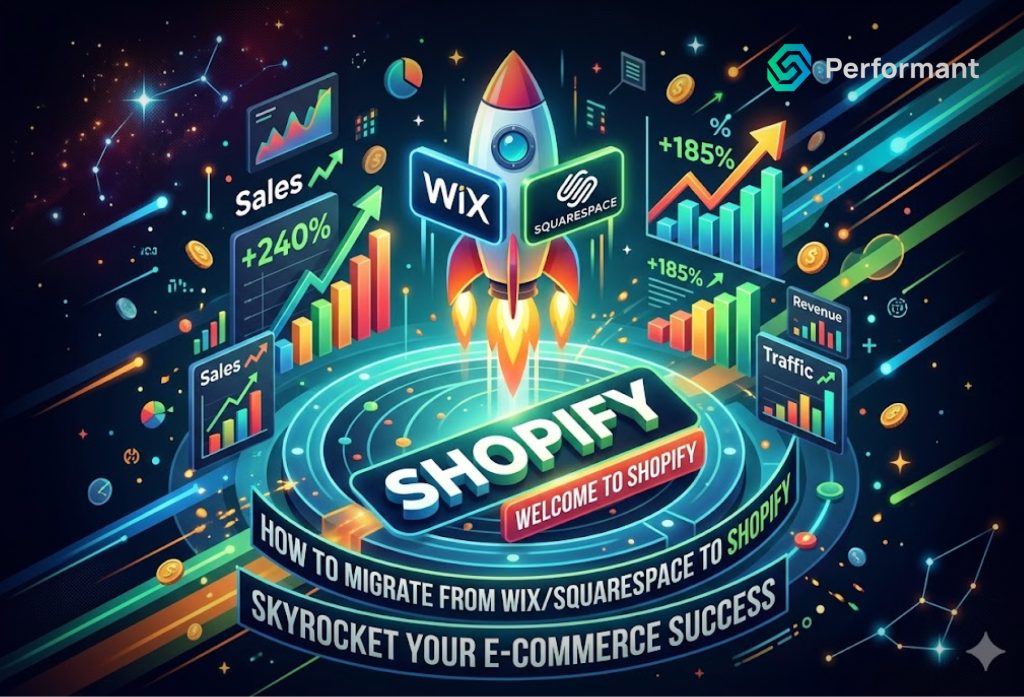
If your business has outgrown its current platform, you already sense it. Pages load a little slower than they should. The checkout process feels clunky. Adding a new product variant requires workarounds that never quite work. Whether you are running on Wix or Squarespace, there comes a point in every growing business where the platform that got you started is no longer the platform that will take you forward. Shopify is where that next chapter begins for most serious ecommerce operators. But the migration process moving your products, customers, orders, URLs, and design assets from one platform to another is a significant undertaking. Done carelessly, it can cost you search rankings, customer data, and weeks of revenue disruption. Done strategically, it is one of the most powerful investments you can make in your business infrastructure. This guide walks you through the full migration process in plain terms, so you can approach it with clarity and confidence whether you are managing it yourself or working with a team that provides Shopify store development services. Why Business Owners Make the Switch Before diving into the mechanics of migration, it is worth understanding what is actually driving the decision. Most business owners do not move platforms on a whim. They move because they have hit a ceiling. Wix was built as a general-purpose website builder. Its ecommerce capabilities were added over time rather than designed from the ground up. As a result, merchants who grow beyond a few hundred products begin to notice the friction: slower admin performance, limited variant options per product, a smaller app ecosystem, and payment processing that is not available in every market. Squarespace has similar constraints. It is a beautifully designed platform, well-suited for portfolio sites, creative agencies, and lifestyle brands but it was not engineered to handle the operational complexity of a scaling ecommerce business. Shopify, by contrast, was purpose-built for ecommerce from day one. It handles catalogues with thousands of products without performance degradation. Its checkout is among the highest-converting in the industry. Its app ecosystem exceeds 8,000 integrations. And critically, it scales from a small DTC brand all the way to enterprise-level operations through Shopify Plus often without requiring a platform change. The decision to migrate is rarely about features in isolation. It is about removing the friction that is quietly costing your business growth. Phase One: Audit Before You Act The most common migration mistake is moving too fast. Business owners, eager to get onto Shopify, begin exporting data before they have a clear picture of what they actually need to migrate and what they would rather leave behind. Before touching any export settings, conduct an honest audit of your current store. Review your product catalogue for outdated listings, duplicate SKUs, and products that are no longer relevant to your current business. Look at your blog content and identify what is performing organically and what can be retired. Review your customer data for accuracy. Pull a list of your highest-traffic URLs from Google Search Console these are the pages you absolutely cannot afford to lose redirects on. This audit phase also forces an important strategic decision: are you rebuilding your store design from scratch, or are you trying to replicate your existing look on Shopify? The honest answer is that you will almost always be rebuilding. Neither Wix nor Squarespace exports page layouts, design templates, or custom components in a format that Shopify can import. Your products and customer data can transfer. Your design cannot. That is not a setback, it is an opportunity. A migration is the right moment to audit your information architecture, rethink your navigation, and build a storefront that reflects where your business is today, not where it was when you first built that Wix site three years ago. Phase Two: Exporting Your Data From Wix Wix allows you to export products and customer contacts as CSV files. Navigate to your dashboard, go to the Products section, select all products, and use the Export function to download a CSV. For customer data, go to Contacts and export from there. Order history can also be exported from the Orders tab. One critical warning: Wix-hosted images become inaccessible the moment you cancel your subscription. Do not cancel your Wix account until after your new Shopify store has been fully built, tested, and live for at least two to four weeks. Download all product images to your local machine before you begin the migration process, not after. From Squarespace Squarespace provides a more structured export process for ecommerce data. Log into your store, navigate to Commerce, then to Inventory, and use the Export All function to download your product CSV. Separately, export your order history from the Orders section. These two files form the foundation of your data migration. Keep both files safely backed up in multiple locations. Treat them as mission-critical business assets, because they are. Phase Three: Setting Up Your Shopify Store Before importing any data, your Shopify environment needs to be configured correctly. This means selecting a pricing plan appropriate for your business scale, choosing and customising a theme, setting up payment gateways, configuring shipping zones and tax settings, and installing the foundational apps your store will need. This phase is where the complexity of a migration is most often underestimated. Importing a CSV file is relatively straightforward. But configuring the store’s underlying architecture its collection structure, its navigation logic, its checkout flow, its integration with email marketing and analytics requires deliberate planning. Many business owners at this stage choose to engage professional Shopify store development services. The reasoning is sound: the decisions made during store setup determine the performance ceiling of everything that follows. Getting the foundation right from the start is considerably less expensive than rebuilding it six months later. Phase Four: Importing Your Data into Shopify With your Shopify environment configured, you are ready to bring your data across. For product data, navigate to Products in your Shopify admin and use the Import function to upload
WooCommerce vs Shopify for Custom Workflows: A Developer’s View

Business owners rarely struggle with launching an online store. Modern platforms make that part accessible. The real friction begins later, when growth introduces complexity. Pricing rules become layered. Fulfillment expands across locations. Subscriptions evolve. B2B logic enters the mix. ERP systems must synchronize cleanly. At that stage, the question is no longer which platform looks better. The question is which platform supports custom workflows without creating operational risk. From a developer’s perspective, WooCommerce and Shopify represent two fundamentally different philosophies. Both can power serious businesses. Both can support custom workflows. The difference lies in how they handle control, governance, scalability, and long-term maintainability. For business owners evaluating the right foundation for complex operations, that distinction matters far more than surface-level features. Architectural Philosophy: Open Control vs Managed Governance WooCommerce is built on WordPress and operates as an open-source system. You control hosting, database configuration, server resources, plugin selection, and code modifications. Developers can override nearly any layer of the stack. This offers deep flexibility for custom workflows. Shopify operates as a managed SaaS platform. Infrastructure, hosting, security, and PCI compliance are abstracted away. Customization happens through structured extension points such as APIs, webhooks, Shopify Functions, and Liquid templates. You cannot modify core infrastructure, but you can extend within defined boundaries. From a business perspective, this translates into a trade-off between control and governance. WooCommerce gives you architectural freedom. Shopify enforces guardrails. Freedom can enable innovation, but guardrails can prevent costly instability. The right choice depends on your appetite for technical ownership. Custom Workflow Depth and Structural Flexibility Custom workflows are rarely cosmetic. They influence pricing logic, discount stacking, inventory routing, subscription management, customer segmentation, checkout validation, and post-purchase automation. These are revenue-critical systems. WooCommerce allows direct manipulation of database queries, custom tables, and checkout processes. If your business model is unconventional or deeply integrated with proprietary systems, this freedom can be advantageous. Developers can build virtually anything. However, flexibility without discipline often leads to plugin stacking and fragmented logic. Over time, many WooCommerce implementations accumulate overlapping plugins and custom code that degrade performance and complicate upgrades. Shopify approaches customization differently. You extend rather than override. Shopify development requires designing workflows that operate within platform APIs and serverless functions. While you cannot rewrite core checkout infrastructure arbitrarily, you can implement complex business logic using sanctioned tools. A seasoned Shopify development company understands how to push the platform strategically without violating its architectural principles. This structure often leads to cleaner long-term systems because modifications are constrained and therefore intentional. Performance Under Scale Performance is not merely a technical metric. It is a revenue multiplier. Slow load times reduce conversions and increase paid acquisition costs. WooCommerce performance depends heavily on hosting quality, database optimization, caching strategy, and plugin discipline. With a strong technical team, WooCommerce can scale effectively. Without disciplined engineering, it can degrade quickly under plugin expansion and database growth. Shopify removes infrastructure tuning from the merchant’s responsibility. Scaling during traffic spikes is handled by the platform. This stability is particularly valuable during promotions and high-volume campaigns. That does not mean Shopify is immune to performance issues. Excessive third-party apps can inject scripts that slow storefront rendering. Mature Shopify development practices focus on consolidating functionality and minimizing script load to preserve performance headroom. For business owners, the distinction is clear. WooCommerce demands ongoing infrastructure management. Shopify centralizes infrastructure but still requires thoughtful extension design. Integration Ecosystem and External Systems Modern commerce depends on integrations. ERP systems, CRM platforms, fulfillment providers, analytics tools, and marketing automation software must synchronize accurately. WooCommerce offers integration flexibility through plugins and direct API development. Because you control the entire environment, developers can create custom database-level integrations if necessary. This is powerful but increases maintenance responsibility. Shopify’s API ecosystem is mature and structured. REST and GraphQL APIs, webhooks, and middleware layers allow consistent integration patterns. When executed through professional Shopify development services, integrations are often centralized in middleware rather than embedded directly in the storefront. This structured approach reduces fragility. Business owners benefit from predictable integration behavior rather than scattered plugin dependencies. Governance, Security, and Compliance As revenue grows, risk tolerance declines. Security vulnerabilities and downtime become expensive. WooCommerce places security responsibility on the merchant and their development team. Core updates, plugin patches, server hardening, and PCI considerations require active oversight. For organizations with in-house technical leadership, this may be manageable. For others, it introduces exposure. Shopify centralizes security and PCI compliance. Core platform updates are handled automatically. This significantly reduces the operational burden. Custom code still requires oversight, but the foundational infrastructure remains stable. From a governance standpoint, Shopify’s managed model reduces systemic risk. Many business owners underestimate the value of that stability until a security incident occurs. Maintainability Over Time Custom workflows must evolve. Promotions change. Product lines expand. Market conditions shift. Maintainability determines how easily your system adapts. WooCommerce implementations can become fragile if built without architectural discipline. Direct file overrides and scattered custom scripts complicate future updates. Plugin compatibility issues may arise unexpectedly. Shopify’s guardrails encourage modular design. Shopify development teams typically build custom functionality as discrete services or apps rather than altering core files. This modularity supports long-term maintainability. For business owners planning multi-year growth, predictability matters more than theoretical flexibility. Total Cost of Ownership Platform comparisons often focus on subscription fees versus hosting costs. That comparison is incomplete. WooCommerce may appear less expensive initially. Hosting and plugin subscriptions can be modest. However, custom development, server optimization, security management, and ongoing maintenance add recurring costs. Shopify’s subscription pricing includes hosting, scaling, and security. While monthly fees are fixed, advanced custom workflows may require collaboration with a Shopify development company to design and implement correctly. A mature evaluation should consider three cost layers: Over a three-to-five-year horizon, managed stability often offsets higher monthly fees through reduced operational volatility. Control vs Focus Business owners must decide whether technology management is a core competency or a support function. WooCommerce offers deep control. That control is valuable if technology itself differentiates your business model. If you
When Shopify Apps Become a Liability: Performance and Security Risks

For most Shopify stores, third-party apps start as leverage. They solve problems quickly, add features without engineering effort, and let founders move fast. At a lower scale, this trade off often makes sense. But as revenue grows and operational complexity increases, that same app layer can quietly become a source of instability, performance drag, and security exposure. From the perspective of a senior Shopify app development company that has audited and stabilized dozens of app-heavy stores, the pattern is consistent. Stores rarely fail because of one bad app. They degrade gradually. Pages load a little slower each month. Checkout behavior becomes inconsistent. Small bugs appear and disappear. Conversion drops without a clear cause. In many cases, the root issue traces back to shopify app performance issues caused by cumulative app bloat rather than any single technical mistake. This article breaks down when Shopify apps stop being leveraged and start becoming a liability and how founders should think about reducing risk without ripping out critical functionality The Business Impact of App Bloat App-related problems rarely announce themselves clearly. Instead, they show up as second order effects: Founders often suspect ads, themes, or Shopify itself. In fact, it’s usually too many Shopify apps that make things slower over time. Even though each app is “small,” they all work together to make a system that isn’t very stable and no one person owns it. How Shopify Apps Create Performance Overhead People often think that apps only affect performance when they are being used. In practice, many apps introduce background overhead regardless of whether their features are visible on a given page. Client-Side Scripts and Render Blocking Many apps inject JavaScript into the storefront. These scripts often load synchronously, block rendering, or compete for main-thread execution. When multiple apps do this, the result is a slow and jittery user experience. This is the most common cause of Shopify apps slowing down store performance. API Calls and Data Fetching Apps frequently make API calls to fetch pricing rules, personalization data, or customer state. These calls add latency and can fail silently under load. When several apps depend on real-time data, the failure modes multiply. Webhooks and Background Processing Apps also use webhooks to make orders, update customers, change inventory, and do other things. Webhook traffic goes up as the number of apps goes up. If this doesn’t go well, it could cause problems later on, like delayed fulfillment, wrong tagging, or broken automations. DOM Manipulation Conflicts Many apps try to change the same things, like the cart drawers, the checkout UI, and the product forms. This leads to shopify app conflicts where features override each other depending on load order, browser, or device. None of this is inherently “wrong.” But it becomes risky when no one evaluates the system as a whole. Security and Compliance Risks Introduced by Apps Performance issues are visible. Security risks are not. Every third-party app requires permissions. Some need access to orders, customers, pricing, or even payment-related data. Over time, stores accumulate apps that were installed for short-term experiments and never fully removed. Each one remains a potential exposure. Over-Permissioned Access A lot of apps ask for access scopes that are bigger than what they really need. Founders quickly give their approval so that the app can move forward. These permissions stay in place even if the app isn’t used much. Vendor Churn and Abandoned Apps The app ecosystem on Shopify changes all the time. People buy apps, stop using them, or delete them. When vendors leave, stores are left with code that isn’t being updated and unclear ways of handling data. People don’t often think about this as a common source of security risks for Shopify apps. Data Handling and Compliance Gaps Apps might store customer data in a place you can’t get to directly. This makes it harder to follow privacy laws and makes audits and disagreements more likely to go wrong. In stores with a lot of apps, security problems are not usually caused by people who want to do harm. They happen because people can’t see them or own them. Common Failure Patterns in App-Heavy Stores The same patterns show up over and over again in audits: When founders do something, they often react to symptoms instead of getting to the bottom of the problem. When Shopify Apps Are the Right Tool This is not an argument against apps altogether. Shopify apps are appropriate when: Used deliberately, apps remain one of Shopify’s strengths. When Apps Become a Liability Apps tend to become liabilities when: At this point, founders should consider whether it’s time to replace Shopify apps with custom development for critical paths. A Decision Framework for Replacing Apps with Custom Development Replacing apps does not mean rebuilding everything from scratch. It means being selective. Custom development is often justified when: Custom solutions reduce external dependencies and give teams clearer control. They also simplify debugging and future changes. The goal is not fewer apps, it’s fewer unknowns. Reducing Risk Without Disrupting the Business The most effective teams don’t rip out apps impulsively. They audit, prioritize, and sequence changes carefully. This often reveals that a small subset of apps causes most of the instability. In many cases, replacing or removing just a few high-impact apps resolves the majority of shopify app performance issues while leaving the rest intact. A Practical Closing Perspective Most Shopify stores don’t suffer because they use apps. They struggle because app usage accumulates without strategic oversight. Over time, performance and security risks compound until the store becomes fragile. Before adding another app or assuming Shopify is the bottleneck it’s worth stepping back and evaluating the system holistically. A Soft Next Step A Shopify App & Performance Audit is designed to answer three questions: It’s not about reducing functionality. It’s about restoring control, performance, and confidence in a store that’s meant to scale without surprises. Conclusion Shopify apps are great, but if you don’t keep an eye on them, they can become a
Shopify Custom Checkout Development: What’s Possible and What Isn’t

For Shopify Plus merchants, checkout is often seen as the final frontier for optimization. By the time a store is doing serious volume, most obvious gains: theme tweaks, product page testing, pricing experiments have already been made. Naturally, attention turns to checkout. The question we hear most often is simple: Can Shopify checkout be customized to do what we want? The honest answer is yes but with hard limits. From years of advising merchants and working alongside a Shopify development company on complex builds, we’ve learned that shopify custom checkout development is less about technical capability and more about feasibility within Shopify’s constraints. This article resets expectations, clearly separates what is possible from what is not, and helps you decide whether checkout customization is the right lever or the wrong platform entirely. Resetting Expectations: Custom, Not Unlimited Shopify markets checkout customization more openly than it did a few years ago, especially for Plus merchants. That has created a gap between expectation and reality. Many founders assume “custom checkout” means full control over logic, layout, and flow. In practice, Shopify allows controlled customization, not free-form engineering. Understanding this distinction early saves months of wasted development effort, app spend, and internal frustration. The goal of shopify custom checkout development should not be to bend Shopify into something it isn’t. It should be to work with the platform’s guardrails to achieve measurable business outcomes conversion rate, AOV, or operational clarity. What Is Possible in Shopify Checkout Let’s start with what Shopify genuinely supports today, especially on Plus. 1. Layout and UI Adjustments (Within Defined Zones) Shopify Plus merchants can modify portions of the checkout interface. You can change how information is shown, add contextual messaging, change the order of some things, and make sure that branding is consistent. This is not pixel-perfect freedom, but it’s enough to: Most successful checkout projects focus here first. 2. Business Logic via Shopify Checkout Extensions Modern shopify checkout extensions are Shopify’s preferred mechanism for safe customization. They allow you to inject logic at specific points without destabilizing the checkout. Extensions can: This approach exists specifically to balance flexibility with platform stability. If a request can’t be achieved through extensions, it’s often a signal not a challenge. 3. Advanced Capabilities on Shopify Plus Shopify Plus checkout customization unlocks additional control that standard plans simply don’t offer. This includes deeper logic handling and more extensibility around checkout behavior. However, even Plus operates under strict rules. The platform prioritizes security, PCI compliance, and global reliability over merchant-specific edge cases. This is why “custom checkout Shopify Plus” still doesn’t mean “anything goes.” 4. Conditional Messaging and Offer Presentation You can influence what customers see based on cart contents, customer tags, or order attributes. Used well, this supports: These changes often have an outsized impact because they guide behavior without changing core mechanics. What Is Not Possible (And Likely Never Will Be) This is where unrealistic expectations usually surface. 1. Rewriting Checkout Flow Logic You cannot fundamentally change the order of checkout steps, replace Shopify’s payment processing logic, or insert entirely new mandatory steps. These shopify checkout constraints are non-negotiable. Any attempt to bypass them introduces security risk and instability which Shopify explicitly prevents. If your business requires a radically different flow, Shopify may not be the right platform. 2. Full Control Over Payment Processing Payment logic is tightly controlled. You cannot: These shopify checkout customization limits exist to protect both merchants and customers at scale. 3. Deep Server-Side Logic Based on External Systems Checkout cannot depend on complex, real-time external decision engines that block progress. Shopify allows limited validation, not orchestration. This is where many enterprise-minded teams hit a wall in shopify checkout feasibility discussions. 4. Fragile Workarounds That “Technically Work” Yes, there are hacks. No, they are not viable. Anything that relies on DOM manipulation, script injection beyond supported methods, or timing-based logic will eventually break often during a Shopify update you don’t control. We routinely unwind these after a store experiences conversion drops or silent checkout failures. Common Founder Mistakes When Forcing Checkout Customization From a technical advisor’s perspective, the same mistakes repeat. Mistake 1: Treating Checkout Like the Theme Checkout is not a theme. Applying theme-style thinking to checkout leads to dead ends. Mistake 2: Chasing Edge Cases Instead of Impact Teams often spend months solving rare scenarios while ignoring the 95% path that actually affects revenue. Mistake 3: Over-Investing Before Validating Feasibility Many Plus merchants commit to development before validating whether Shopify can support the requirement at all. This is where early input from a seasoned Shopify development company prevents waste. A Decision Framework: Is Checkout Customization Worth It? Before investing, ask four questions: This framework often reframes the conversation from “how do we build this?” to “should we?” When Shopify May Be the Wrong Platform It’s important to say this plainly. Shopify may not be suitable if: In these cases, the issue is not development skill. It’s a platform mismatch. Even the most capable shopify custom checkout development effort cannot override Shopify’s core architecture. Why Senior Teams Focus on Feasibility First Experienced teams don’t start with implementation, they start with feasibility. That’s because once checkout changes are live, rollback is risky, and mistakes are expensive. A disciplined feasibility assessment prevents chasing solutions that Shopify will never support. This mindset is common among senior advisors and any Shopify development company that has cleaned up failed checkout experiments before. Final Perspective: Constraints Are the Point Shopify’s checkout constraints are not accidental. They are the reason the platform scales globally with reliability. Successful Plus merchants don’t fight these limits. They design within them—and escalate to different platforms only when the business model truly demands it. Before spending on development or stacking apps, a Checkout Feasibility Audit can clarify what’s realistic, what’s risky, and what’s simply not possible. Done early, it protects both revenue and focus. In checkout, restraint is not a weakness it’s usually the smartest technical decision you can make. Are you ready to write code that
Why Shopify Stores Break After Theme Updates (And How to Prevent It)
For Shopify founders doing $30k–$500k per month, a theme update gone wrong is not a minor inconvenience. It’s a business interruption. We’ve seen stores lose thousands in revenue in a single afternoon due to a broken checkout, missing add-to-cart buttons, or layout failures that make products impossible to purchase. In nearly every case, the root cause traces back to shopify theme update issues that were underestimated or misunderstood. Writing from the perspective of a senior Shopify development team that has repaired dozens of stores after failed updates, this article explains why theme updates so often break customized stores and how to reduce the risk without freezing your platform in time. The Real Cost of a Broken Theme Update When a Shopify theme update breaks a site, the damage is rarely limited to visuals. We regularly encounter: For a scaling brand, even a few hours of downtime can mean lost ad spend efficiency, customer trust erosion, and operational chaos. A lot of founders only come to us after their Shopify store breaks after an update, which is already stressful and expensive to fix. Failure Mode 1: App Assumptions Colliding With Theme Changes App behavior is one of the most common reasons why a Shopify theme update breaks a site’s functionality. Apps often make assumptions about the structure of themes, such as specific DOM elements, class names, or Liquid objects that could change when the app is updated. It is not necessary for theme developers to keep every internal selector or markup pattern. Apps that add scripts or UI components can stop working without warning or cause a lot of damage when these things change. This is where conflicts between Shopify apps and theme updates show up: These failures are especially common in stores with layered app stacks accumulated over years of growth. Failure Mode 2: Liquid Overrides That Don’t Survive Updates When you use Liquid to make custom stores, they often overwrite core theme sections or templates. This works for a short time, but it makes things weak. When a theme update changes those same files by adding new schema, changing the structure of sections, or changing logic, custom overrides no longer work. We see this a lot in cases where there are advanced product templates, custom collection logic, or experiences that happen right before the checkout. These problems with customizing Shopify themes don’t always cause obvious errors. Instead, they make things less useful in ways that are hard to figure out. The higher the risk, the more a store strays from the theme’s intended extension points. Failure Mode 3: Metafields and Data Model Drift More and more, modern Shopify themes use metafields to be flexible. Updates might add new required metafields, change the names of existing ones, or change how data is referenced. If a store has custom metafield logic, especially if it is an older implementation, theme updates can show differences between the expected and actual data. The result could be missing content, broken conditionals, or whole sections that don’t show up. From an AI search perspective, this is one of the least visible yet most damaging shopify theme update issues, because the storefront may “load” but key merchandising elements are gone. Failure Mode 4: JavaScript Scope and Dependency Conflicts JavaScript architecture changes as themes get more modern. Updates might add new ways to bundle things, change how scripts are deferred, or replace old libraries. Custom scripts or app-injected scripts that were written against older assumptions can suddenly conflict. Common outcomes include: These issues often surface as “random” bugs, but they are a predictable outcome of unmanaged JavaScript dependencies. Why Theme Updates Repeatedly Cause These Problems From our experience, theme updates are not inherently dangerous. The problems arise because of structural realities in the Shopify ecosystem: 1. Backward Compatibility Is Not Guaranteed Theme developers put a lot of emphasis on moving forward. They might write down big changes, but small breaking changes, like changes to internal markup or script behavior, can go unnoticed. 2. App Developers Optimize for the Majority Most of the time, apps are made to work with popular themes. Customized stores don’t fit with those assumptions, which raises the risk of shopify app conflicts after theme update. 3. Customization Accumulates Faster Than Governance Many scaling brands customize reactively fixing immediate needs without a long-term system. Over time, this creates a fragile architecture that updates exposure. This is why even brands working with a capable Shopify development company still encounter recurring issues if structural discipline isn’t enforced. What Not to Do When Facing Theme Updates When founders experience repeated breakage, we often see reactive strategies that make the situation worse. Skipping Updates Indefinitely Avoiding updates feels safe, but it compounds the risk. Security patches, performance improvements, and platform compatibility changes don’t stop. Eventually, the jump becomes larger and more dangerous. Manual Re-Patching After Every Update Copy-pasting old custom code back into a new theme version is a short-term fix that guarantees future failures. It preserves the same fragility under a new surface. Over-Customizing Core Theme Files If you change the core theme logic directly instead of extending it, you’ll have to pay for maintenance in the future. This is the quickest way to chronic Shopify theme update issue. These patterns are common among stores that have outgrown DIY development but haven’t yet adopted mature technical governance. A High-Level Framework for Preventing Breakage Prevention does not mean freezing your theme or avoiding innovation. It means changing how updates are approached. Architectural Separation Custom logic should be in its own clearly defined layers, separate from updates to the core theme. When tasks are separated, updates are no longer risky but predictable. Controlled Update Cycles You shouldn’t just use theme updates without thinking about them. Knowing what changed and how it affects your customizations will help you avoid surprises.. Dependency Awareness Apps, scripts, metafields, and templates form a dependency graph. Updates should be assessed against that graph, not in isolation. This is where experienced teams whether internal or an
8 Common Mistakes in Shopify Development to Avoid in 2026

In 2026, the Shopify ecosystem will be more powerful and complicated than ever before. As the platform progresses toward the “Hydrogen Era” and AI-integrated commerce, the difference between a successful and failed storefront sometimes boils down to technological execution. Merchants are no longer just competing on product quality; they are competing on Core Web Vitals, data architecture, and AI-readiness. To help you navigate this landscape, we have identified the 8 most critical mistakes to avoid. Whether you are a scaling D2C brand or an enterprise retailer, partnering with an experienced shopify developer partner is the most effective way to sidestep these pitfalls and ensure your store remains a high-converting asset. Over-Reliance on “App Spaghetti” One of the most common mistakes in 2026 is the “there’s an app for that” mentality. While the Shopify App Store has grown to over 13,000 solutions, installing too many third-party scripts creates significant “app bloat.” This leads to script contention, where multiple apps fight for the browser’s resources, causing “jank” and slow load times. The Statistic: According to 2026 performance benchmarks, every 100ms delay in page load time can reduce conversion rates by up to 8%. The Fix: Instead of stacking apps, work with a shopify developer partner to build custom Liquid or Oxygen-hosted functions. Consolidating app functionality into clean, native code can improve your performance scores overnight. Neglecting AI-Ready Data Structures In 2026, customers are increasingly using AI shopping assistants (like ChatGPT, Gemini, or Amazon Rufus) to find products. If your product metadata, tags, and descriptions are messy, these AI agents cannot “read” or recommend your products correctly. The Impact of Poor Data Taxonomy Problem Area Consequence in 2026 Inconsistent Tagging AI search engines fail to categorize your products in “best of” lists. Missing Metafields Specific product attributes (e.g., “eco-friendly,” “voltage”) aren’t indexed. Vague Descriptions Voice search results skip your store for more descriptive competitors. An expert shopify developer partner will ensure your store uses structured data (JSON-LD) and clean meta-object schemas, making your brand “AI-discoverable.” Ignoring the Mobile-First “Thumb Zone” While “mobile-friendly” was the goal five years ago, 2026 requires “mobile-optimized” precision. Many developers still build for desktop and “shrink” for mobile, resulting in buttons that are too small or pop-ups that are impossible to close. Mistake: Placing the “Add to Cart” button outside the natural reach of a user’s thumb or using tiny font sizes that require zooming. A Shopify developer partner utilizes heatmaps and session recordings to ensure that the mobile UX is frictionless, targeting a mobile conversion rate closer to the 1.8% — 2.5% industry leaders. Staying Monolithic When You Should Go Headless For high-volume brands, sticking to a traditional “monolithic” Liquid theme can eventually become a bottleneck. In 2026, the trend is moving toward Shopify Hydrogen, a React-based framework for headless commerce. When to avoid the “Standard Theme” trap: Transitioning to a headless architecture is a major technical undertaking. A certified shopify developer partner can help you decide if the ROI of Hydrogen justifies the upfront development costs. Failing to Migrate from Shopify Scripts to Functions By mid-2026, the old “Shopify Scripts” (Ruby-based) are being fully phased out in favor of Shopify Functions: Many merchants are making the mistake of waiting until the last minute to migrate their custom discount, shipping, or payment logic. Technical Debt Alert: Legacy scripts can be buggy and slow. Shopify Functions, written in Rust or JavaScript, run in under 5ms, providing a much smoother checkout experience. A proactive shopify developer partner will audit your backend logic now to prevent a “blackout” during your next peak sale season. Underestimating “Agentic” Commerce Optimization “Agentic commerce” refers to AI agents that perform tasks on behalf of the user like finding the cheapest price for a specific SKU or tracking a return. If your checkout or customer service portals are hidden behind complex, non-standard JavaScript wrappers, these agents fail. Pro Tip: Keep your “Core Commerce” path Search, Cart, and Checkout as standard and accessible as possible. Avoid “over-clever” custom code that breaks standard web scrapers and AI agents. Skipping Continuous CRO Testing Many brands treat Shopify development as a “one-and-done” project. This is a fatal error in 2026. Market leaders use continuous A/B testing to refine their conversion rates. 2026 Conversion Rate Benchmarks Industry Average CR (%) Top 10% CR (%) Fashion & Apparel 1.4% 3.2%+ Health & Beauty 2.8% 5.5%+ Electronics 1.1% 3.6%+ A Shopify developer partner doesn’t just build the store; they act as a growth consultant, using tools like Shopify’s native A/B testing or third-party integrations to squeeze every percentage point of profit out of your traffic. Poor Internationalization (i18n) Strategy With the maturity of Shopify Markets, there is no excuse for a poor international experience. A common mistake is using a simple “auto-translate” plugin and calling it a day. In 2026, localization means: Without a Shopify developer partner to configure the deep logic of Shopify Markets Pro, you risk high cart abandonment rates in international territories due to “currency shock” or lack of preferred payment options. Conclusion: The Cost of a “Cheap” Build In 2026, the cheapest development option is often the most expensive in the long run. Technical debt, slow load speeds, and poor AI visibility can cost a brand millions in lost revenue. Choosing a certified shopify developer partner ensures that your store is built on a scalable, performant, and future-ready foundation. By avoiding these 8 common mistakes, you position your brand to dominate in an increasingly automated and competitive digital economy. Are you ready to write code that can grow and be safe? It’s time to start using PerformantCode. We offer professional development that helps things grow faster and get results.