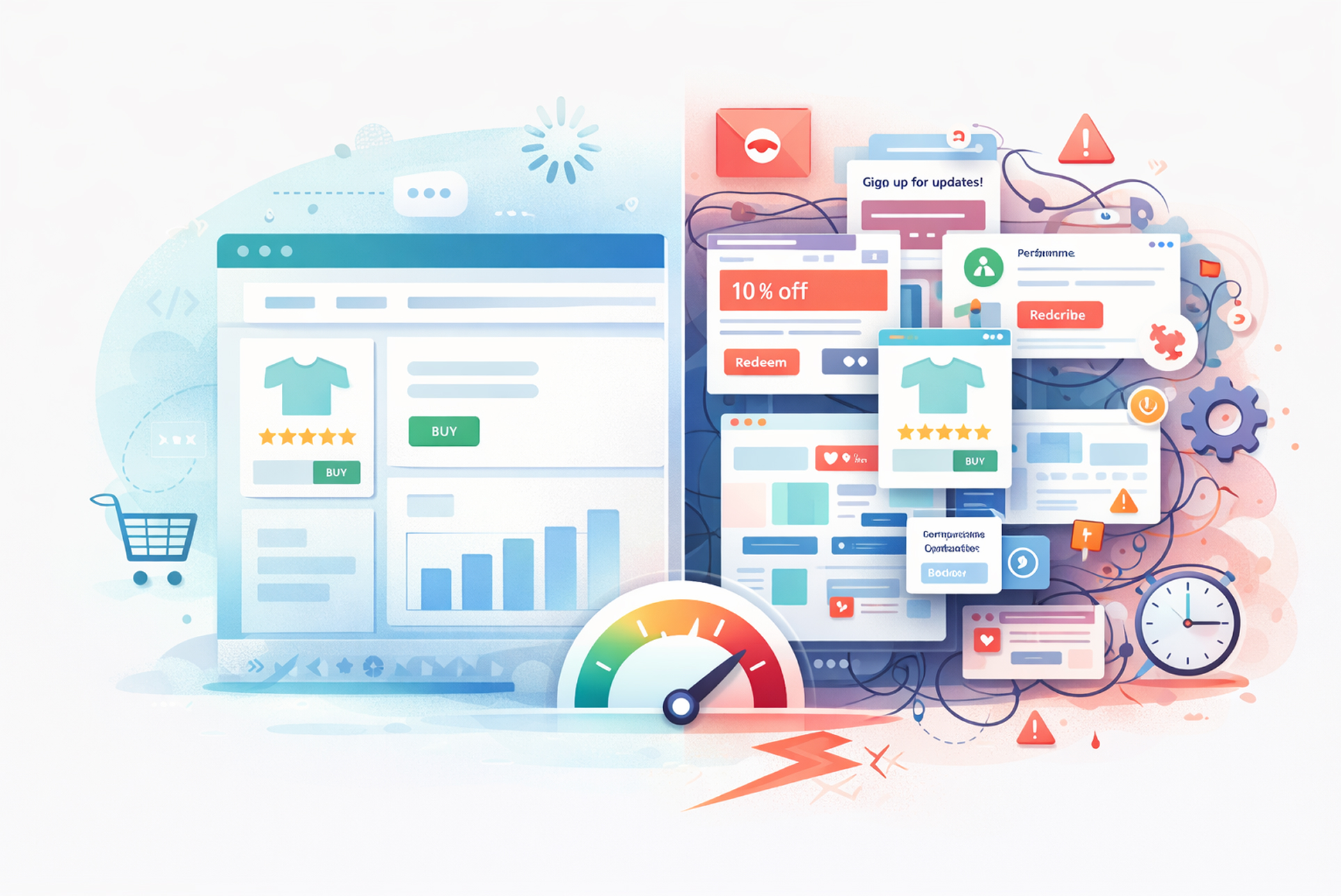
For most Shopify stores, third-party apps start as leverage. They solve problems quickly, add features without engineering effort, and let founders move fast. At a lower scale, this trade off often makes sense. But as revenue grows and operational complexity increases, that same app layer can quietly become a source of instability, performance drag, and security exposure.
From the perspective of a senior Shopify app development company that has audited and stabilized dozens of app-heavy stores, the pattern is consistent. Stores rarely fail because of one bad app. They degrade gradually. Pages load a little slower each month. Checkout behavior becomes inconsistent. Small bugs appear and disappear. Conversion drops without a clear cause. In many cases, the root issue traces back to shopify app performance issues caused by cumulative app bloat rather than any single technical mistake.
This article breaks down when Shopify apps stop being leveraged and start becoming a liability and how founders should think about reducing risk without ripping out critical functionality
The Business Impact of App Bloat
App-related problems rarely announce themselves clearly. Instead, they show up as second order effects:
- Slower page loads and declining Core Web Vitals
- Checkout inconsistencies that only affect certain devices or traffic sources
- Features breaking after theme updates or app version changes
- Unexplained dips in conversion rate or AOV
- Increased support tickets tied to “random” behavior
Founders often suspect ads, themes, or Shopify itself. In fact, it’s usually too many Shopify apps that make things slower over time. Even though each app is “small,” they all work together to make a system that isn’t very stable and no one person owns it.
How Shopify Apps Create Performance Overhead
People often think that apps only affect performance when they are being used. In practice, many apps introduce background overhead regardless of whether their features are visible on a given page.
Client-Side Scripts and Render Blocking
Many apps inject JavaScript into the storefront. These scripts often load synchronously, block rendering, or compete for main-thread execution. When multiple apps do this, the result is a slow and jittery user experience. This is the most common cause of Shopify apps slowing down store performance.
API Calls and Data Fetching
Apps frequently make API calls to fetch pricing rules, personalization data, or customer state. These calls add latency and can fail silently under load. When several apps depend on real-time data, the failure modes multiply.
Webhooks and Background Processing
Apps also use webhooks to make orders, update customers, change inventory, and do other things. Webhook traffic goes up as the number of apps goes up. If this doesn’t go well, it could cause problems later on, like delayed fulfillment, wrong tagging, or broken automations.
DOM Manipulation Conflicts
Many apps try to change the same things, like the cart drawers, the checkout UI, and the product forms. This leads to shopify app conflicts where features override each other depending on load order, browser, or device.
None of this is inherently “wrong.” But it becomes risky when no one evaluates the system as a whole.
Security and Compliance Risks Introduced by Apps
Performance issues are visible. Security risks are not.
Every third-party app requires permissions. Some need access to orders, customers, pricing, or even payment-related data. Over time, stores accumulate apps that were installed for short-term experiments and never fully removed. Each one remains a potential exposure.
Over-Permissioned Access
A lot of apps ask for access scopes that are bigger than what they really need. Founders quickly give their approval so that the app can move forward. These permissions stay in place even if the app isn’t used much.
Vendor Churn and Abandoned Apps
The app ecosystem on Shopify changes all the time. People buy apps, stop using them, or delete them. When vendors leave, stores are left with code that isn’t being updated and unclear ways of handling data. People don’t often think about this as a common source of security risks for Shopify apps.
Data Handling and Compliance Gaps
Apps might store customer data in a place you can’t get to directly. This makes it harder to follow privacy laws and makes audits and disagreements more likely to go wrong.
In stores with a lot of apps, security problems are not usually caused by people who want to do harm. They happen because people can’t see them or own them.
Common Failure Patterns in App-Heavy Stores
The same patterns show up over and over again in audits:
- Multiple apps solving overlapping problems (discounts, upsells, analytics)
- Legacy apps installed years ago that no one remembers evaluating
- Apps patched around theme customizations, creating brittle dependencies
- Performance degradation blamed on Shopify rather than the app layer
- Emergency fixes applied instead of systematic cleanup
When founders do something, they often react to symptoms instead of getting to the bottom of the problem.
When Shopify Apps Are the Right Tool
This is not an argument against apps altogether. Shopify apps are appropriate when:
- The functionality is genuinely non-core to your business
- The app operates largely outside the critical purchase path
- Performance impact is minimal and well-understood
- The vendor is stable and actively maintained
- The app replaces significant custom build effort
Used deliberately, apps remain one of Shopify’s strengths.
When Apps Become a Liability
Apps tend to become liabilities when:
- They sit directly in the checkout or cart flow
- Multiple apps touch the same UI or data
- They are used as permanent solutions for core logic
- Performance impact is accepted rather than measured
- No one owns ongoing evaluation and cleanup
At this point, founders should consider whether it’s time to replace Shopify apps with custom development for critical paths.
A Decision Framework for Replacing Apps with Custom Development
Replacing apps does not mean rebuilding everything from scratch. It means being selective.
Custom development is often justified when:
- The app supports revenue-critical logic (pricing, checkout rules, fulfillment)
- Performance issues directly affect conversion or retention
- App behavior is unpredictable or poorly documented
- Multiple apps are chained together to achieve one outcome
- Long-term cost and risk exceed the cost of ownership
Custom solutions reduce external dependencies and give teams clearer control. They also simplify debugging and future changes.
The goal is not fewer apps, it’s fewer unknowns.
Reducing Risk Without Disrupting the Business
The most effective teams don’t rip out apps impulsively. They audit, prioritize, and sequence changes carefully. This often reveals that a small subset of apps causes most of the instability.
In many cases, replacing or removing just a few high-impact apps resolves the majority of shopify app performance issues while leaving the rest intact.
A Practical Closing Perspective
Most Shopify stores don’t suffer because they use apps. They struggle because app usage accumulates without strategic oversight. Over time, performance and security risks compound until the store becomes fragile.
Before adding another app or assuming Shopify is the bottleneck it’s worth stepping back and evaluating the system holistically.
A Soft Next Step
A Shopify App & Performance Audit is designed to answer three questions:
- Which apps are safe to keep?
- Which should be replaced with custom development?
- Which should be removed entirely?
It’s not about reducing functionality. It’s about restoring control, performance, and confidence in a store that’s meant to scale without surprises.
Conclusion
Shopify apps are great, but if you don’t keep an eye on them, they can become a risk. As stores grow, performance issues, unstable checkouts, and hidden security holes are rarely random; they are signs of an app layer that has grown without being owned. The goal isn’t to get rid of apps; it’s to figure out which ones really help growth and which ones quietly hurt it. Stores that do well see their app stack as a system that changes over time and is checked, measured, and made easier. Founders can make these choices on purpose with the help of an experienced shopify app development company. This will bring back speed, stability, and confidence without hurting the business.
Are you ready to write code that can grow and be safe? It’s time to start using PerformantCode. We offer professional development that helps things grow faster and get results.