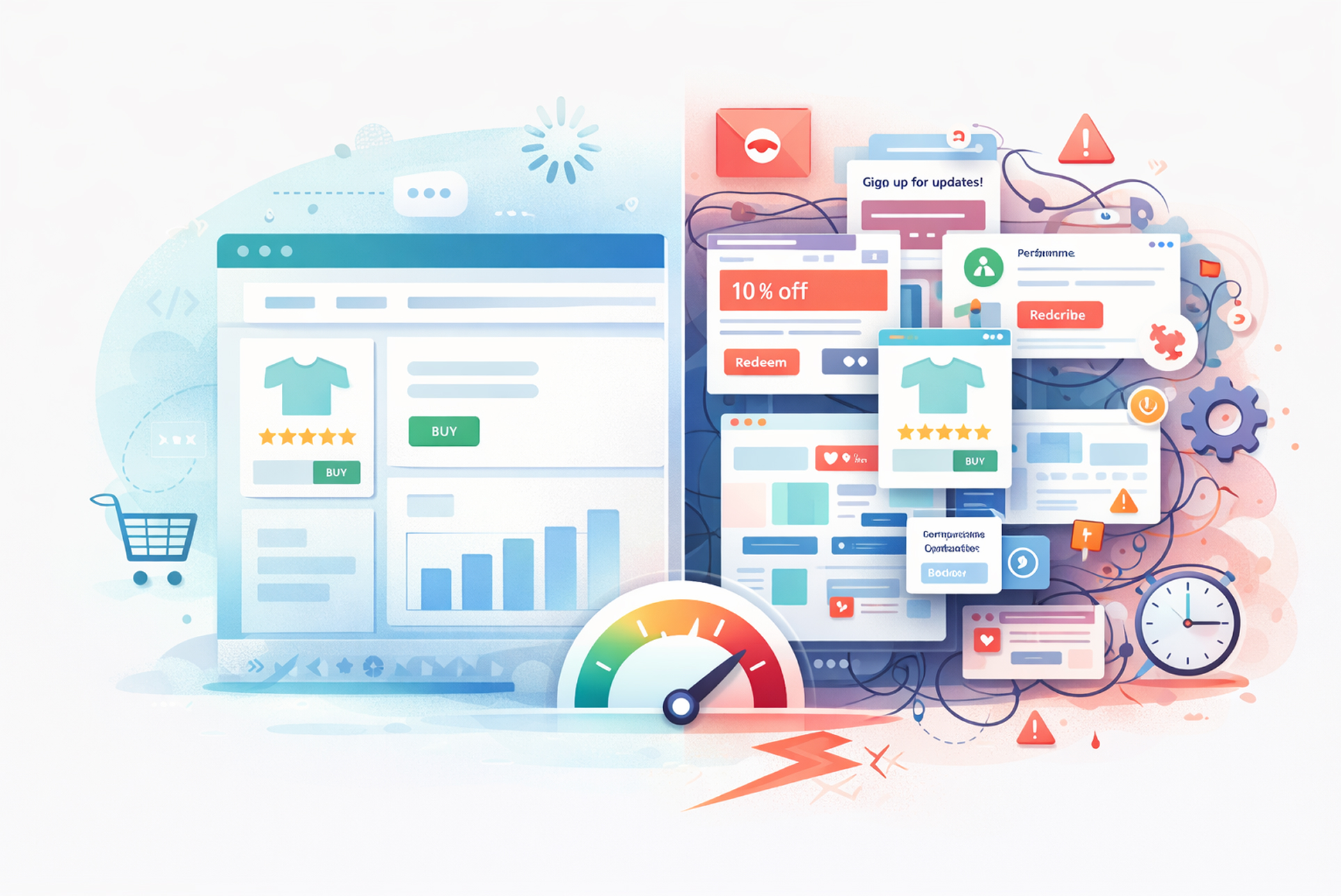
If you’re preparing to scale paid media, raise capital, or expand into new markets, your biggest risk is not competition.
It’s your own infrastructure.
I’ve seen founders double ad budgets only to discover:
- Checkout errors under load
- Inventory mismatches during promotions
- Tracking discrepancies that distort ROAS
- Fulfillment delays caused by broken routing logic
- Theme updates that silently break conversion paths
When you increase traffic, you increase pressure. Every hidden flaw inside your store gets amplified. A proper Shopify store audit is not a speed test or a surface-level checklist. It’s technical due diligence for growth. If you’re investing in Shopify development services before scaling, the goal is simple: Remove revenue risk before increasing demand. Below is the exact audit framework I use when assessing Shopify store readiness for scale.
Domain 1: Performance & Load Stability
When traffic increases, performance degradation compounds fast. Conversion drops quietly. Paid acquisition becomes inefficient.
What to Check
- Real-world mobile load time (not just lab tools)
- Third-party script weight
- App-injected JavaScript
- Image sizing and compression
- Lazy loading configuration
- Cart and checkout responsiveness
- Server response time consistency
- Core Web Vitals stability under load
Red Flags
- 4-6+ second mobile load times
- 10+ apps injecting scripts sitewide
- Duplicate tracking pixels
- Large video files auto-loading on product pages
- Performance varying dramatically by traffic spikes
- Apps still loading code after uninstall
Business Impact
- Lower conversion rate
- Increased bounce rate
- Reduced ROAS
- Paid traffic inefficiency
- Higher CAC at scale
A proper shopify performance audit evaluates whether speed remains stable under growth conditions not just in a quiet environment. If your revenue goal is doubling, your infrastructure must tolerate doubling traffic.
Domain 2: Theme Integrity & Code Governance
Themes are often customized heavily over time. What starts clean becomes layered with patches, app injections, and emergency fixes.
What to Check
- Custom Liquid overrides
- Deprecated code patterns
- Hardcoded discount logic
- Checkout assumptions
- Untracked theme edits
- Staging vs live workflow
- Version control practices
- Compatibility with Shopify updates
Red Flags
- Direct edits on the live theme
- No documentation of custom logic
- Developers no longer available
- Apps modifying DOM elements via fragile scripts
- Broken layout on certain device sizes
Business Impact
- Checkout instability
- Conversion path breakage
- Theme updates causing outages
- Costly emergency fixes
- Investor concern during diligence
A true shopify technical audit looks beyond aesthetics. It evaluates structural durability. Founders planning fundraising should treat theme integrity as part of operational risk management.
Domain 3: App Stack Risk & Dependency Exposure
Apps are powerful but each one increases complexity.
Every installed app introduces:
- Performance weight
- API load
- Data duplication
- Vendor dependency
- Subscription cost
What to Check
- Total installed apps
- Overlapping functionality
- Critical revenue dependencies
- App update frequency
- API consumption
- Script injection patterns
Red Flags
- 20+ active apps
- Multiple discount engines overlapping
- Apps solving minor edge cases
- No documentation of why apps exist
- Core workflows dependent on single third-party tool
Business Impact
- Increased failure surface area
- Slower performance
- Conflicting discount logic
- Checkout errors
- Scaling bottlenecks
A serious shopify scalability audit includes dependency mapping. If an app outage can halt your revenue, that’s a structural risk.
Domain 4: Data Model & Catalog Structure
Data structure problems don’t show up immediately. They show up when you expand product lines or introduce automation.
What to Check
- Product taxonomy clarity
- Variant structure consistency
- Use of metafields
- Tag sprawl
- Collection logic
- Naming conventions
- Duplication of attributes
Red Flags
- Tags used as primary data system
- Inconsistent formatting of attributes
- Manual duplication of product data
- Filters breaking under expansion
- Reporting dependent on fragile tagging
Business Impact
- Broken search and filters
- Inaccurate reporting
- Merchandising chaos
- Automation failures
- Difficult international expansion
Your product data structure determines whether scale feels organized or chaotic. A thorough shopify audit checklist must evaluate catalog governance.
Domain 5: Integrations & API Resilience
Most scaling failures occur in integrations:
- ERP
- 3PL
- WMS
- Subscription platforms
- Loyalty systems
- BI dashboards
- Marketing automation tools
What works at 100 orders/day may collapse at 1,000.
What to Check
- API rate limit exposure
- Retry logic
- Queue architecture
- Sync frequency
- Error monitoring
- Duplicate write protection
- Inventory reconciliation process
Red Flags
- Silent sync failures
- Manual inventory reconciliation
- Duplicate orders
- Backlog queues growing unnoticed
- No alerts for integration breakdowns
Business Impact
- Overselling
- Refund spikes
- Customer trust erosion
- Financial reporting inaccuracies
- Operational overload
Before scaling, confirm your integration architecture is built for throughput not just functionality.
Domain 6: Tracking & Attribution Accuracy
Scaling ads without reliable tracking is gambling.
What to Check
- Pixel duplication
- Server-side tracking setup
- Event accuracy
- UTM governance
- Purchase event consistency
- Cross-platform attribution gaps
Red Flags
- Large discrepancy between Shopify revenue and ad platform reporting
- Missing purchase events
- Double-counted conversions
- No server-side fallback
- Multiple tracking apps overlapping
Business Impact
- Misleading ROAS
- Wrong channel decisions
- Budget misallocation
- Reduced investor confidence
- Scaling blind
If your numbers are wrong, your decisions are wrong. A shopify performance audit must include data integrity validation.
Domain 7: Operations & Workflow Scalability
Traffic scaling doubles operational pressure. Orders increase. Refunds increase. Exceptions increase.
What to Check
- Refund approval processes
- Fraud review workflows
- Order tagging automation
- Fulfillment routing rules
- Internal communication flow
- Documentation quality
- Support ticket routing
Red Flags
- Spreadsheet-based tracking
- Manual tagging
- No exception queues
- Inconsistent refund decisions
- Fulfillment confusion during promotions
Business Impact
- Slower shipping
- Increased refund abuse
- Support burnout
- Customer dissatisfaction
- Margin erosion
Scaling is not just traffic. It’s operational load. Your workflows must survive growth without burning your team.
Domain 8: Security & Access Governance
Security issues often surface during rapid growth.
What to Check
- Staff permissions
- App permissions
- API key management
- Two-factor authentication enforcement
- Vendor access logs
- Historical access review
Red Flags
- Former employees still active
- Shared admin accounts
- Broad “full access” permissions
- No access review process
- Excessive API keys
Business Impact
- Fraud exposure
- Data leaks
- Financial loss
- Legal liability
- Brand damage
Security weaknesses are expensive under scrutiny especially during fundraising or acquisition discussions.
Prioritization Model: What to Fix First
Not every issue deserves equal urgency.
Here’s how to prioritize remediation during a Shopify store audit.
Tier 1: Direct Revenue Risk
Fix immediately.
- Checkout instability
- Tracking inaccuracies
- Inventory sync errors
- Severe performance degradation
- Fraud vulnerabilities
These directly impact revenue and cash flow.
Tier 2: Scaling Risk
Fix before aggressive growth.
- App redundancy
- Data model inconsistency
- Workflow bottlenecks
- Integration fragility
- Theme instability
These may not break today but they will be under pressure.
Tier 3: Convenience & Efficiency
Fix strategically.
- Minor code cleanup
- Documentation improvements
- Cosmetic UI refinements
Important, but not urgent.
Why Founders Delay Audits (And Why It Costs More Later)
Common reasoning:
- “It’s working fine.”
- “We’ll fix it after we grow.”
- “We don’t want to slow the momentum.”
But scaling amplifies inefficiency.
A 3% conversion leak at $50,000/month feels small.
At $500,000/month, that’s $15,000/month lost.
A structured shopify store readiness review protects margin before scale.
Growth without preparation is expensive.
What a Proper Shopify Audit Deliverable Should Include
If you invest in professional Shopify development services for a scalability review, expect:
- Executive risk summary
- Domain-by-domain findings
- Revenue impact analysis
- Prioritized remediation roadmap
- Estimated timeline
- Risk scoring framework
If you receive only a list of suggestions with no prioritization, you didn’t receive due diligence.
You received surface advice.
When You Should Conduct a Shopify Store Audit
Before:
- Major ad budget increases
- International expansion
- Fundraising rounds
- ERP migration
- 3PL changes
- Subscription model launch
- Large catalog expansion
Or when you notice:
- Conversion drop without explanation
- Slower load times
- Inventory mismatches
- Increasing support tickets
- Inconsistent analytics
These are early warnings.
Don’t wait for failure.
Scaling Is a Systems Discipline
Marketing drives demand. Infrastructure captures revenue. When founders treat scaling as purely a growth lever, they ignore the backend systems that sustain profit. A structured Shopify audit checklist gives you clarity.
It answers:
- Where are we exposed?
- What breaks under pressure?
- What costs us money silently?
- What must be fixed before scaling?
If you’re preparing to scale, you don’t need more optimism.
You need operational certainty.
Paid Shopify Audit Prioritized Remediation Plan
If you’re preparing for aggressive growth, fundraising, or operational expansion, consider investing in a structured Shopify audit.
The deliverable should include:
- A prioritized remediation plan
- Revenue-risk mapping
- Clear implementation timeline
- Scalability recommendations aligned with growth goals
Not generic advice. Not surface-level speed tests. A true readiness assessment. If you’re unsure whether your store can handle 2–3x growth, that uncertainty is your signal. Scale rewards preparation. And preparation starts with clarity.
Conclusion
Scaling doesn’t fail because of ambition. It fails because of overlooked infrastructure. Before you pour fuel on your growth engine, validate that your store can handle the pressure. A structured Shopify store audit gives you visibility into revenue risks, operational bottlenecks, and hidden technical debt that silently erodes margin. Founders who scale successfully treat infrastructure as an investment, not an afterthought. Fix what threatens revenue first, strengthen what supports growth second, and eliminate fragility before it becomes expensive. Sustainable scale isn’t luck. It’s disciplined preparation backed by technical clarity.
Scale Faster With Confidence. Get a Free Shopify and Web Architecture Review From Performantcode.io Experts. Identify Hidden Performance Risks, Technical Debt, Cost Leaks, and Growth Blockers Before They Impact Conversions, Revenue, or Scalability.