Traffic spikes are often seen as a success signal. A campaign performs well, a product goes viral, or a seasonal promotion drives a surge of visitors. From a business perspective, this is the moment you’ve been working toward. Demand is high, intent is strong, and revenue potential is at its peak.
Yet for many WooCommerce stores, this is also the moment things start to break. Pages slow down. Checkout becomes inconsistent. Orders fail to process. In extreme cases, the site becomes completely unavailable. What should have been a revenue surge turns into a missed opportunity.
From a senior engineering perspective, these failures are rarely caused by traffic alone. They are the result of underlying architectural weaknesses that only become visible under pressure. Understanding why WooCommerce stores fail during traffic spikes is the first step toward building systems that can handle growth with confidence.
The Misconception: Traffic Is the Problem
Many business owners assume that high traffic is the root cause of failure. In reality, traffic is only the trigger. It exposes inefficiencies that already exist within the system. A WooCommerce store that performs well at low or moderate traffic levels may still contain hidden bottlenecks. These bottlenecks remain unnoticed until concurrent users increase and system load intensifies.
When dozens or hundreds of users interact with your store simultaneously browsing products, updating carts, and completing checkout—the system must handle multiple complex processes at once. If any part of the architecture is inefficient, it becomes a point of failure. This is why simply upgrading hosting often provides only temporary relief. Without addressing structural inefficiencies, the same issues will reappear during the next spike.
Database Bottlenecks Under Load
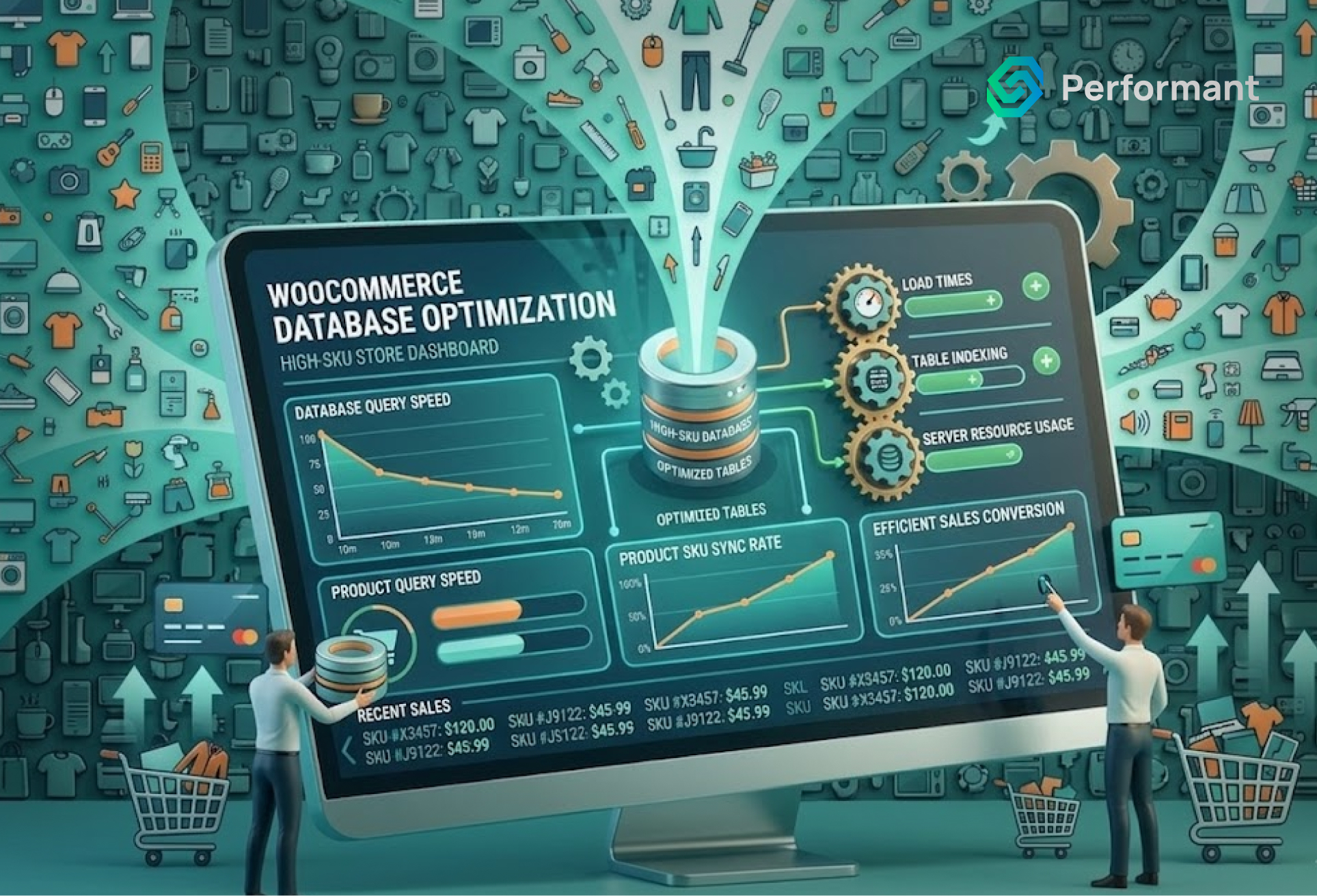
At the core of every WooCommerce store is the database. It manages products, orders, customer data, and transactional logic. During traffic spikes, database activity increases dramatically.
Each visitor triggers queries. Product pages load metadata. Carts update dynamically. Checkout processes validate inventory, calculate totals, and create orders. These operations are executed in real time and often simultaneously. If the database is not optimized, query execution slows down as load increases. Tables grow large, indexes become inefficient, and queries that once executed quickly begin to lag.
The result is a cascading delay. Pages take longer to load. Checkout actions stall. Customers begin to experience friction. Professional woocommerce development services typically identify database performance as one of the first areas to address when preparing for high traffic. Optimization at this level has a direct impact on overall stability.
Plugin Overload and Conflicting Logic
WooCommerce’s flexibility comes largely from its plugin ecosystem. While this is a strength, it also introduces risk.
Most growing stores accumulate plugins over time. Marketing tools, analytics scripts, checkout customizations, shipping integrations, and payment gateways all add functionality. Each plugin introduces its own logic, scripts, and database interactions. Under normal conditions, this complexity may appear manageable. During a traffic spike, however, the combined load of these plugins becomes significant.
Multiple plugins may attempt to execute processes simultaneously. Some may conflict with each other. Others may trigger redundant operations. The system becomes overloaded not just by traffic, but by the inefficiency of its own architecture. This is where experienced woocommerce development services bring discipline. By auditing and consolidating plugin usage, they reduce unnecessary load and improve system coherence.
Checkout Fragility Under Concurrent Usage
Checkout is the most sensitive part of any WooCommerce store. It is also the most complex. During a traffic spike, multiple customers attempt to complete transactions at the same time. Each checkout session requires real-time validation, payment processing, and order creation. If the checkout process is overloaded with scripts, external API calls, or conflicting logic, it becomes unstable under pressure.
Common issues include failed payments, duplicate submissions, delayed confirmations, and session timeouts. These problems directly impact revenue because they occur at the moment of conversion. From a business perspective, this is the most expensive failure point. Reliable woocommerce development services focus on simplifying checkout workflows. By removing unnecessary steps and ensuring efficient execution, they create a system that can handle concurrent transactions without breaking.
Hosting Limitations and Resource Constraints
Infrastructure plays a critical role in handling traffic spikes, but it is often misunderstood. Many WooCommerce stores operate on hosting environments that are sufficient for average traffic levels. During a spike, these environments quickly reach their limits. CPU usage increases, memory is consumed, and server processes become saturated. When resources are exhausted, response times degrade or the server stops responding altogether. Upgrading hosting can improve capacity, but it does not address inefficiencies in how resources are used. An unoptimized store will consume additional resources regardless of how powerful the server is.
The most effective approach combines scalable infrastructure with efficient system design. This ensures that available resources are used effectively rather than wasted.
External Dependencies and API Failures
Modern WooCommerce stores rely heavily on external services. Payment gateways, shipping providers, tax calculation tools, and marketing platforms all integrate through APIs. During traffic spikes, the volume of API calls increases. If any external service experiences latency or downtime, it affects your store directly.
For example, a slow payment gateway response can delay checkout processing. A shipping API failure can prevent cost calculation. These dependencies introduce risk that is outside your direct control.
A well-architected system minimizes reliance on real-time external calls during critical interactions. Instead, it uses caching, asynchronous processing, or fallback mechanisms to maintain stability. Experienced woocommerce development services design integration strategies that reduce dependency on external systems at peak moments.
Lack of Load Testing and Preparation
One of the most common reasons WooCommerce stores fail during traffic spikes is lack of preparation. Many businesses launch campaigns without testing how their systems will perform under increased load. They assume that if the store works under normal conditions, it will scale automatically.
This assumption is costly. Load testing simulates real-world traffic conditions. It identifies bottlenecks before they impact customers. Without it, issues remain hidden until they occur in production.
A disciplined approach includes testing not only frontend performance, but also checkout workflows, background processes, and integration behavior. Professional woocommerce development services treat load testing as a standard part of scaling strategy, not an optional step.
Background Processes Competing for Resources
WooCommerce relies on background tasks to manage operations such as sending emails, syncing inventory, and processing integrations. During a traffic spike, these tasks increase in frequency. At the same time, frontend activity is also at its peak. If background processes run on the same resources as customer-facing operations, they compete for capacity. This can slow down the entire system. For example, bulk order processing or inventory updates may consume server resources needed for checkout. The result is degraded performance at the most critical moments. Separating background processes into dedicated systems or queues ensures that operational tasks do not interfere with customer experience. This is a common optimization implemented by advanced woocommerce development services.
Caching Limitations in Dynamic Environments
Caching is often promoted as a performance solution, but it has limitations in WooCommerce environments. While caching can improve product and category page performance, it is less effective for dynamic pages such as cart and checkout. These pages must be generated in real time for each user. During traffic spikes, the inability to cache these critical pages places additional strain on the system. This is why caching alone cannot prevent failures. It must be combined with efficient backend processing and optimized workflows. Understanding where caching helps—and where it does not is essential for building a resilient system.
Poor Frontend Optimization
Performance is not only about backend systems. Frontend behavior plays a significant role in how your store handles traffic. Heavy JavaScript files, unoptimized images, and excessive third-party scripts increase page load times. During traffic spikes, these inefficiencies become more pronounced. Browsers take longer to render pages. Customers experience delays and may abandon sessions before completing actions.
Frontend optimization focuses on reducing asset size, improving loading strategies, and minimizing unnecessary scripts. These improvements enhance performance without requiring additional infrastructure.
The Financial Impact of Failure
When a WooCommerce store fails during a traffic spike, the consequences are immediate and measurable. Lost revenue is the most obvious impact. Customers who cannot complete purchases do not return instantly. Many will abandon the transaction entirely. Advertising spend is also wasted. Traffic acquired through paid campaigns does not convert if the system cannot handle it. Brand perception suffers as well. Customers expect reliability. A poor experience during peak demand can damage trust and reduce future engagement. From a strategic perspective, the cost of failure during high-demand periods often exceeds the cost of proper preparation.
Building for Resilience Instead of Reacting to Failure
The key to handling traffic spikes is not reacting to failures after they occur. It is building systems that are designed to handle load from the start.
This requires a shift in mindset. Instead of viewing performance as a technical issue, it should be treated as a core business function. Revenue depends on system reliability. Therefore, architecture decisions must align with growth goals.
A resilient WooCommerce store is built on several principles:
- Efficient database design and query optimization
- Controlled plugin usage and clean system architecture
- Simplified and stable checkout workflows
- Scalable infrastructure with resource isolation
- Reduced dependency on real-time external services
- Continuous monitoring and load testing
These elements work together to create a system that performs consistently under pressure.
The Role of Strategic Technical Leadership
Many WooCommerce stores struggle during traffic spikes because technical decisions are made reactively.
Features are added quickly to meet immediate needs. Plugins are installed without long-term evaluation. Infrastructure is upgraded only after problems appear.
This approach works in early stages, but it becomes risky as the business grows.
Strategic technical leadership ensures that systems are designed with scalability in mind. It aligns technology decisions with business objectives and anticipates future challenges.
Working with experienced woocommerce development services provides access to this level of expertise. Instead of reacting to failures, businesses can proactively build systems that support growth.
Conclusion
Traffic spikes do not cause WooCommerce stores to fail. They reveal the weaknesses that already exist within the system. Database inefficiencies, plugin overload, fragile checkout processes, infrastructure limitations, and external dependencies all contribute to instability under load. For business owners, the lesson is clear. Growth requires preparation. The systems that support your store must evolve alongside your success. By investing in structured optimization and working with professional woocommerce development services, you can transform traffic spikes from a risk into an opportunity. When your store is built for resilience, high demand becomes what it should be: a moment of maximum revenue, not maximum stress.
Are you ready to write code that can grow and be safe? It’s time to start using PerformantCode. We offer professional development that helps things grow faster and get results.