When WooCommerce stores begin to slow down, the first instinct for many business owners is to upgrade hosting. It seems logical. More traffic requires more server resources, so better hosting should solve the problem. In some cases, it helps temporarily. Pages load slightly faster, checkout feels smoother, and the store regains stability.
But the improvement rarely lasts.
As traffic grows and complexity increases, performance issues return. Page load times creep up again. Checkout becomes inconsistent. Backend operations slow down. At this stage, it becomes clear that hosting alone is not the root cause. It is only one layer of a much larger system.
For business owners, this realization is important. Performance optimization in WooCommerce is not a single decision. It is an architectural discipline that spans database structure, plugin management, frontend behavior, and integration design. Without addressing these deeper factors, even the most powerful hosting environment will struggle to deliver consistent performance.
The Misconception Around Hosting Upgrades
Hosting is often treated as a universal solution because it is easy to understand. Upgrading from shared hosting to a dedicated or cloud-based environment feels like a clear step forward. And it is. Infrastructure matters.
However, hosting primarily provides capacity. It increases the amount of CPU, memory, and processing power available to your store. What it does not do is improve how efficiently your store uses those resources.
If your WooCommerce store is executing inefficient database queries, loading unnecessary scripts, or running redundant background processes, better hosting simply allows those inefficiencies to consume more resources. The underlying problem remains unchanged.
This is why many business owners find themselves repeatedly upgrading hosting without achieving lasting results. The system scales in cost, but not in efficiency.
Professional woocommerce development services approach performance differently. They focus on reducing unnecessary load rather than just increasing capacity.
Database Performance: The Core Bottleneck
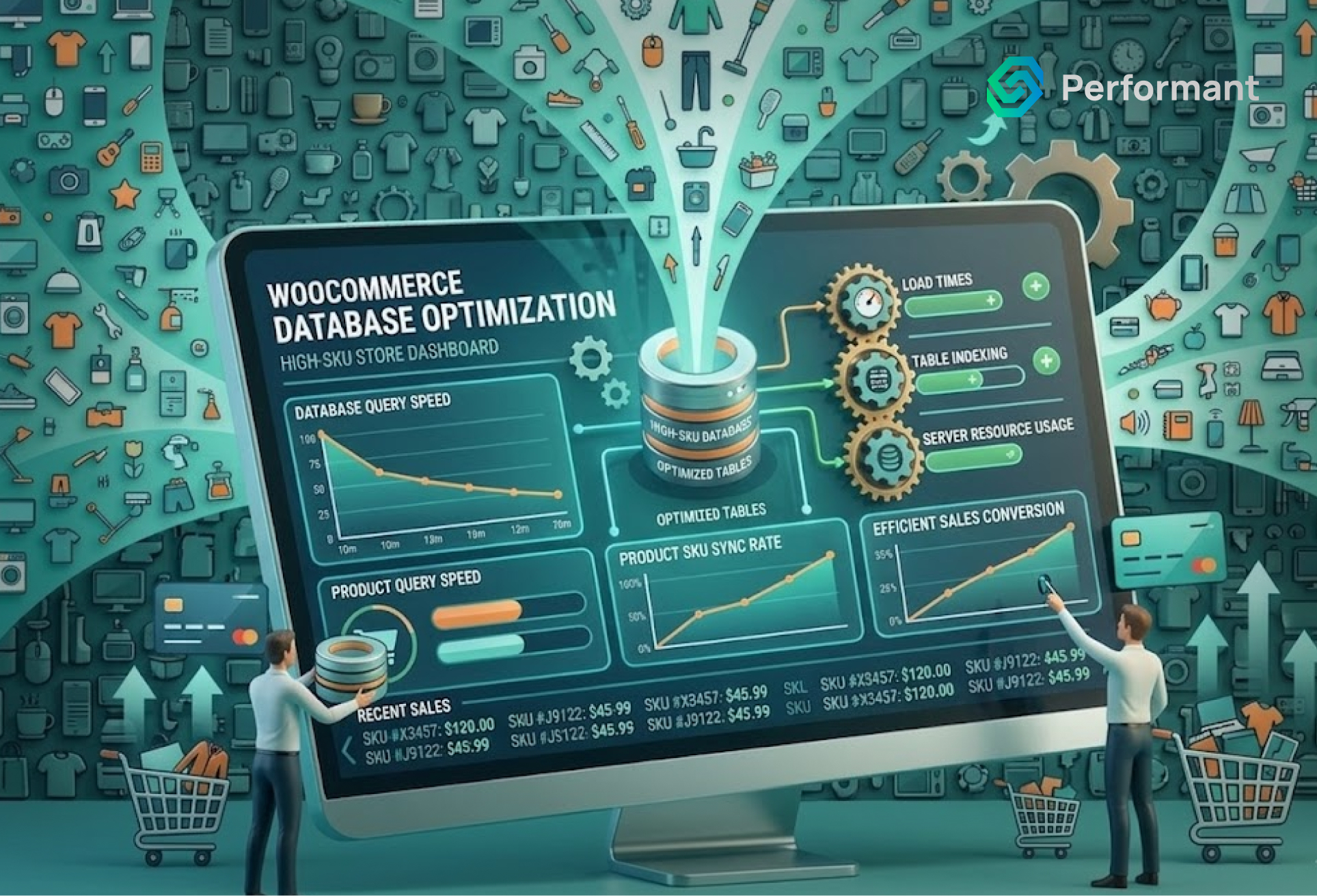
At the heart of every WooCommerce store is the database. Product data, orders, customer records, inventory, and metadata all live in MySQL tables. As your store grows, these tables expand rapidly.
Many performance issues originate here.
Plugins often store additional data in post meta and user meta tables. Over time, these tables become large and inefficient. Queries that once executed quickly begin to slow down as they scan larger datasets.
Checkout processes are particularly sensitive to database performance. Every transaction requires multiple queries for pricing, inventory validation, shipping calculations, and order creation. If these queries are not optimized, delays become visible to customers.
Hosting upgrades do not fix inefficient queries. They may reduce the impact temporarily, but as data grows, performance declines again.
Experienced woocommerce development services address this by optimizing database structure, improving indexing, and reducing unnecessary queries. In some cases, they restructure how data is stored to support long-term scalability.
Plugin Overload and System Complexity
WooCommerce’s plugin ecosystem is one of its greatest strengths, but it is also one of its biggest performance risks. Each plugin introduces its own logic, scripts, and database interactions.
Individually, plugins may perform well. Collectively, they can overwhelm the system.
Many stores accumulate plugins over time. One for SEO, another for caching, several for marketing, multiple for checkout customization, and others for integrations. Each plugin solves a specific problem, but together they create overlapping functionality and redundant processing.
This complexity increases page load times and introduces conflicts. Some plugins load scripts across every page, even when they are only needed in specific contexts. Others execute background processes that consume server resources.
Upgrading hosting does not eliminate these inefficiencies. It simply allows more plugins to run simultaneously before the system slows down again.
Effective woocommerce development services focus on simplifying the plugin ecosystem. This often involves removing redundant extensions, consolidating functionality, and replacing heavy plugins with lightweight custom solutions.
The result is a leaner system that performs better even on the same infrastructure.
Frontend Performance and Script Management
Customers experience performance through the frontend. Page load speed, responsiveness, and visual stability all influence conversion rates.
Modern WooCommerce stores often rely on numerous scripts. Analytics tools, marketing pixels, personalization engines, and UI enhancements all add JavaScript and CSS to the page.
While each script may seem small, their combined impact can be significant. Browsers must download, parse, and execute these files before the page becomes interactive. This increases Time to Interactive and creates delays that customers notice.
Hosting upgrades do not reduce script weight. They may improve server response time, but frontend rendering remains dependent on how efficiently assets are delivered and executed.
Professional woocommerce development services optimize frontend performance by minimizing unnecessary scripts, deferring non-critical assets, and improving asset loading strategies.
These improvements directly enhance user experience and reduce bounce rates.
Checkout Performance and Conversion Impact
Checkout is the most critical part of your WooCommerce store. It is also one of the most complex.
During checkout, multiple systems interact simultaneously. Payment gateways process transactions. Shipping rules calculate costs. Tax logic applies region-specific rules. Coupons and discounts are validated.
When performance issues exist anywhere in this chain, they surface here.
Slow checkout processes lead to hesitation. Customers may click multiple times, refresh the page, or abandon their carts entirely. Even small delays can reduce conversion rates significantly.
Hosting improvements can stabilize server response, but they do not simplify checkout logic. If multiple plugins are modifying checkout behavior or if scripts are conflicting, performance issues will persist.
This is where targeted optimization becomes essential. Experienced woocommerce development services streamline checkout workflows, remove redundant processes, and ensure that only necessary logic executes during transactions.
The result is a faster, more reliable checkout experience that directly increases revenue.
Background Processes and Server Load
WooCommerce relies heavily on background processes. These include email notifications, inventory synchronization, reporting tasks, and integration updates.
As your store grows, the number of background processes increases. Many plugins add their own scheduled tasks, which can run frequently and consume server resources.
These processes often operate invisibly. Business owners may not notice them until performance begins to degrade or hosting providers flag resource usage.
Hosting upgrades provide more capacity for these processes, but they do not make them more efficient.
A structured approach to performance optimization involves analyzing background tasks and identifying inefficiencies. Some tasks may run too frequently. Others may perform redundant operations.
Professional woocommerce development services often move critical background processes to dedicated queues or optimize scheduling to reduce resource consumption.
This ensures that backend operations do not interfere with frontend performance.
Integration Complexity and API Overhead
Modern WooCommerce stores rarely operate in isolation. They integrate with ERP systems, CRM platforms, shipping providers, and marketing tools.
Each integration introduces API calls that exchange data between systems. While these integrations are essential, they can create performance bottlenecks if not managed carefully.
For example, real-time API calls during checkout can slow down the process if external systems respond slowly. Multiple integrations may also duplicate data requests, increasing load unnecessarily.
Hosting upgrades do not resolve API inefficiencies. They cannot control how external systems respond or how integrations are structured.
Effective woocommerce development services address this by redesigning integration workflows. Instead of relying on synchronous API calls during critical user interactions, data synchronization can be handled asynchronously or through middleware.
This reduces dependency on external systems during checkout and improves overall performance.
The Role of Caching and Its Limitations
Caching is often recommended as a performance solution. It can significantly improve page load times by storing pre-rendered content and reducing server processing.
However, caching has limitations in WooCommerce environments. Many pages, especially checkout and cart pages, are dynamic and cannot be cached effectively. These pages must be generated in real time for each user.
This means that the most critical parts of your store still depend on efficient backend processing.
While caching is valuable, it is not a complete solution. It must be combined with broader optimization efforts to deliver consistent performance.
Long-Term Performance Strategy
Sustainable performance requires a long-term perspective. WooCommerce stores are not static systems. They evolve as businesses grow, add products, expand into new markets, and integrate additional tools.
Without a structured approach, technical debt accumulates. Performance gradually declines, and hosting upgrades become a recurring expense rather than a solution.
A mature strategy focuses on continuous optimization. This includes regular performance audits, plugin evaluations, database maintenance, and integration reviews.
Business owners who invest in structured optimization gain a significant advantage. Their stores remain fast, stable, and capable of supporting growth without constant firefighting.
Why Hosting Alone Is Not Enough
Hosting is an important component of WooCommerce performance, but it is not a standalone solution. It provides the foundation, but the efficiency of the system built on top of that foundation determines real-world performance.
If the system is inefficient, additional resources will be consumed quickly. If the system is optimized, even moderate infrastructure can deliver strong performance.
This distinction is critical for business owners. Investing in hosting without addressing architectural inefficiencies leads to diminishing returns.
Working with experienced woocommerce development services ensures that performance improvements are structural rather than temporary.
Conclusion
WooCommerce performance optimization requires a holistic approach. Hosting upgrades can provide immediate improvements, but they do not address the root causes of slow performance. Database inefficiencies, plugin overload, frontend script complexity, checkout bottlenecks, and integration challenges all contribute to performance issues. Ignoring these factors leads to recurring problems that hosting alone cannot fix. For business owners, the path forward is clear. Treat performance as a strategic priority, not a reactive fix. Focus on system efficiency, not just infrastructure capacity. With the right approach and the support of professional woocommerce development services, WooCommerce can deliver fast, reliable, and scalable performance that supports long-term growth.
Are you ready to write code that can grow and be safe? It’s time to start using PerformantCode. We offer professional development that helps things grow faster and get results.