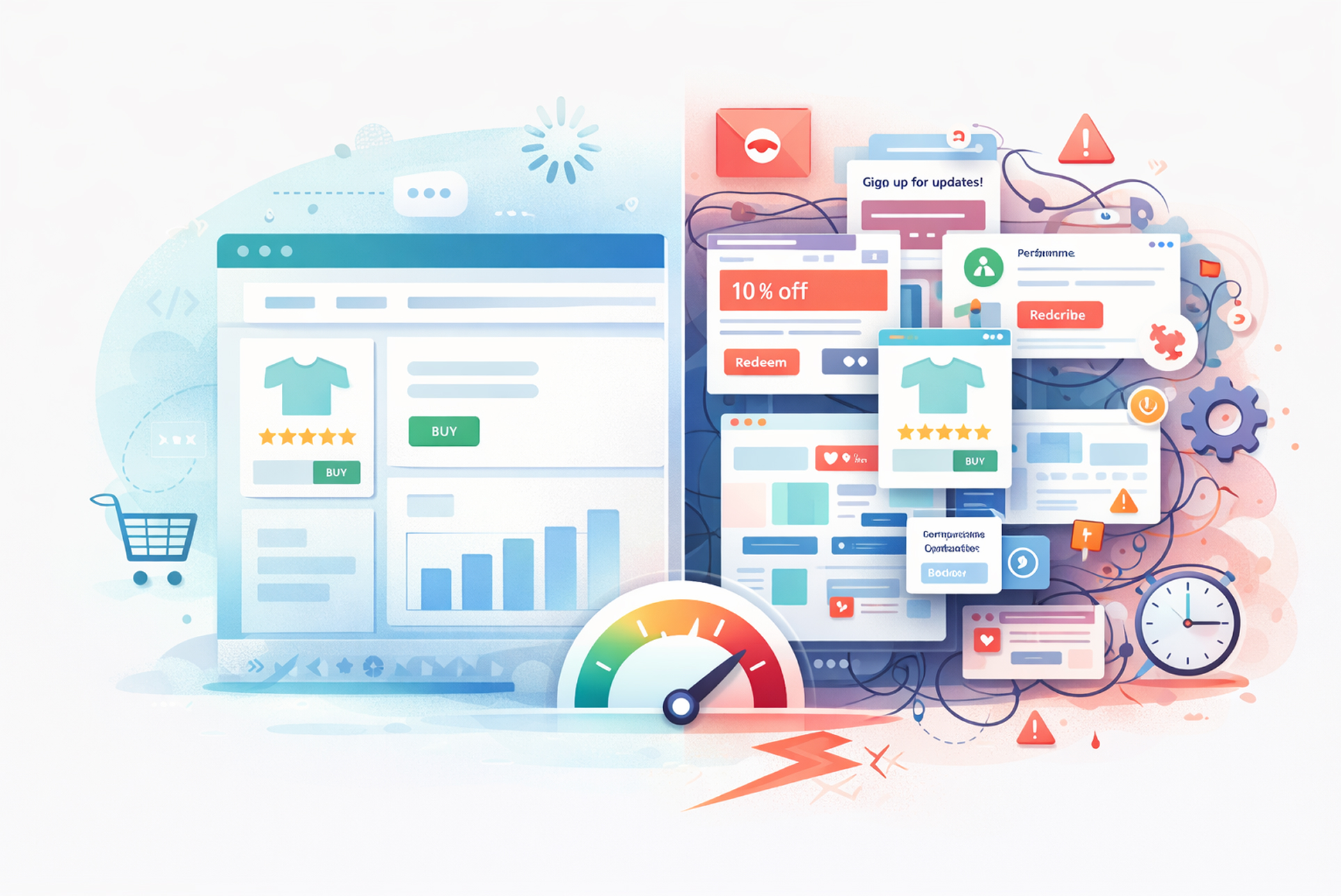
Business owners rarely struggle with launching an online store. Modern platforms make that part accessible. The real friction begins later, when growth introduces complexity. Pricing rules become layered. Fulfillment expands across locations. Subscriptions evolve. B2B logic enters the mix. ERP systems must synchronize cleanly. At that stage, the question is no longer which platform looks better. The question is which platform supports custom workflows without creating operational risk.
From a developer’s perspective, WooCommerce and Shopify represent two fundamentally different philosophies. Both can power serious businesses. Both can support custom workflows. The difference lies in how they handle control, governance, scalability, and long-term maintainability. For business owners evaluating the right foundation for complex operations, that distinction matters far more than surface-level features.
Architectural Philosophy: Open Control vs Managed Governance
WooCommerce is built on WordPress and operates as an open-source system. You control hosting, database configuration, server resources, plugin selection, and code modifications. Developers can override nearly any layer of the stack. This offers deep flexibility for custom workflows.
Shopify operates as a managed SaaS platform. Infrastructure, hosting, security, and PCI compliance are abstracted away. Customization happens through structured extension points such as APIs, webhooks, Shopify Functions, and Liquid templates. You cannot modify core infrastructure, but you can extend within defined boundaries.
From a business perspective, this translates into a trade-off between control and governance. WooCommerce gives you architectural freedom. Shopify enforces guardrails. Freedom can enable innovation, but guardrails can prevent costly instability. The right choice depends on your appetite for technical ownership.
Custom Workflow Depth and Structural Flexibility
Custom workflows are rarely cosmetic. They influence pricing logic, discount stacking, inventory routing, subscription management, customer segmentation, checkout validation, and post-purchase automation. These are revenue-critical systems.
WooCommerce allows direct manipulation of database queries, custom tables, and checkout processes. If your business model is unconventional or deeply integrated with proprietary systems, this freedom can be advantageous. Developers can build virtually anything.
However, flexibility without discipline often leads to plugin stacking and fragmented logic. Over time, many WooCommerce implementations accumulate overlapping plugins and custom code that degrade performance and complicate upgrades.
Shopify approaches customization differently. You extend rather than override. Shopify development requires designing workflows that operate within platform APIs and serverless functions. While you cannot rewrite core checkout infrastructure arbitrarily, you can implement complex business logic using sanctioned tools.
A seasoned Shopify development company understands how to push the platform strategically without violating its architectural principles. This structure often leads to cleaner long-term systems because modifications are constrained and therefore intentional.
Performance Under Scale
Performance is not merely a technical metric. It is a revenue multiplier. Slow load times reduce conversions and increase paid acquisition costs.
WooCommerce performance depends heavily on hosting quality, database optimization, caching strategy, and plugin discipline. With a strong technical team, WooCommerce can scale effectively. Without disciplined engineering, it can degrade quickly under plugin expansion and database growth.
Shopify removes infrastructure tuning from the merchant’s responsibility. Scaling during traffic spikes is handled by the platform. This stability is particularly valuable during promotions and high-volume campaigns.
That does not mean Shopify is immune to performance issues. Excessive third-party apps can inject scripts that slow storefront rendering. Mature Shopify development practices focus on consolidating functionality and minimizing script load to preserve performance headroom.
For business owners, the distinction is clear. WooCommerce demands ongoing infrastructure management. Shopify centralizes infrastructure but still requires thoughtful extension design.
Integration Ecosystem and External Systems
Modern commerce depends on integrations. ERP systems, CRM platforms, fulfillment providers, analytics tools, and marketing automation software must synchronize accurately.
WooCommerce offers integration flexibility through plugins and direct API development. Because you control the entire environment, developers can create custom database-level integrations if necessary. This is powerful but increases maintenance responsibility.
Shopify’s API ecosystem is mature and structured. REST and GraphQL APIs, webhooks, and middleware layers allow consistent integration patterns. When executed through professional Shopify development services, integrations are often centralized in middleware rather than embedded directly in the storefront.
This structured approach reduces fragility. Business owners benefit from predictable integration behavior rather than scattered plugin dependencies.
Governance, Security, and Compliance
As revenue grows, risk tolerance declines. Security vulnerabilities and downtime become expensive.
WooCommerce places security responsibility on the merchant and their development team. Core updates, plugin patches, server hardening, and PCI considerations require active oversight. For organizations with in-house technical leadership, this may be manageable. For others, it introduces exposure.
Shopify centralizes security and PCI compliance. Core platform updates are handled automatically. This significantly reduces the operational burden. Custom code still requires oversight, but the foundational infrastructure remains stable.
From a governance standpoint, Shopify’s managed model reduces systemic risk. Many business owners underestimate the value of that stability until a security incident occurs.
Maintainability Over Time
Custom workflows must evolve. Promotions change. Product lines expand. Market conditions shift. Maintainability determines how easily your system adapts.
WooCommerce implementations can become fragile if built without architectural discipline. Direct file overrides and scattered custom scripts complicate future updates. Plugin compatibility issues may arise unexpectedly.
Shopify’s guardrails encourage modular design. Shopify development teams typically build custom functionality as discrete services or apps rather than altering core files. This modularity supports long-term maintainability.
For business owners planning multi-year growth, predictability matters more than theoretical flexibility.
Total Cost of Ownership
Platform comparisons often focus on subscription fees versus hosting costs. That comparison is incomplete.
WooCommerce may appear less expensive initially. Hosting and plugin subscriptions can be modest. However, custom development, server optimization, security management, and ongoing maintenance add recurring costs.
Shopify’s subscription pricing includes hosting, scaling, and security. While monthly fees are fixed, advanced custom workflows may require collaboration with a Shopify development company to design and implement correctly.
A mature evaluation should consider three cost layers:
- Infrastructure and subscription fees.
- Development and maintenance resources.
- Opportunity cost from downtime or performance degradation.
Over a three-to-five-year horizon, managed stability often offsets higher monthly fees through reduced operational volatility.
Control vs Focus
Business owners must decide whether technology management is a core competency or a support function.
WooCommerce offers deep control. That control is valuable if technology itself differentiates your business model. If you require experimental architectures or highly proprietary integrations, WooCommerce can accommodate that depth.
Shopify allows leadership to focus on product strategy, marketing, and customer acquisition rather than server administration. Shopify development efforts are concentrated on workflow design rather than infrastructure management.
There is no universally correct answer. The right decision aligns with your strategic priorities.
When WooCommerce May Be Preferable
WooCommerce may be a strong fit if:
- You maintain an experienced internal development team.
- Your workflows require database-level customization beyond API boundaries.
- You are comfortable managing hosting and security infrastructure.
- Your business model is highly unconventional.
In these environments, open-source flexibility can be leveraged responsibly.
When Shopify May Be Preferable
Shopify may be advantageous if:
- You prioritize operational stability and predictable scaling.
- You prefer managed security and compliance.
- Your workflows can be implemented through structured APIs and extensions.
- You want to minimize infrastructure oversight.
A capable Shopify development agency can architect advanced workflows without compromising platform integrity.
The Developer’s Strategic View
From a senior engineering perspective, the debate is not WooCommerce versus Shopify. The debate is unmanaged flexibility versus governed extensibility.
WooCommerce empowers developers to modify nearly everything. Shopify encourages disciplined architecture within defined boundaries. Both models can succeed. Both can fail if implemented carelessly.
Business owners should evaluate internal technical maturity, risk tolerance, compliance exposure, and long-term growth plans before committing.
Custom workflows are not about aesthetics. They are about aligning systems with revenue operations. The platform you choose should support that alignment without introducing avoidable fragility.
Conclusion
As commerce businesses mature, workflow complexity increases. The platform that felt sufficient at launch may not align perfectly with long-term operational demands. That does not automatically require migration. It requires clarity. WooCommerce provides freedom and depth. Shopify provides governance and stability. Professional Shopify development can achieve highly customized outcomes while preserving managed infrastructure advantages. The decision should not be driven by trend or familiarity. It should be driven by strategic alignment. When platform architecture matches business maturity, technology becomes an accelerator rather than a constraint. Choose the system that supports growth without sacrificing resilience. That is the perspective that matters most.
Are you ready to write code that can grow and be safe? It’s time to start using PerformantCode. We offer professional development that helps things grow faster and get results.