A Concept Worth Examining Carefully
Few topics in eCommerce generate as much confident assertion and as little practical clarity as headless commerce. It is discussed in agency proposals, referenced in technology conference sessions, and promoted by platform providers as the architecture of serious, forward-thinking businesses. For business owners who are not developers, navigating that noise to reach a clear-eyed assessment is genuinely difficult and even experienced Shopify development services teams will tell you the honest answer depends entirely on your specific business circumstances.
The difficulty is compounded by the fact that the answer is genuinely different for different businesses. Headless commerce is not a universal upgrade. It is an architectural approach that solves specific problems exceptionally well and creates significant operational complexity for businesses that do not have those problems. Understanding which category your business falls into before committing resources in either direction is the entire point of this article.
What follows is a structured explanation of what Shopify headless commerce actually means, what business circumstances create a genuine case for it, what it costs in development investment and ongoing complexity, and how to assess your own situation honestly. The goal is not a recommendation. It is the information needed to make the right decision for your business.
What Headless Commerce Means in Plain Terms
Traditional Shopify operates as a unified system. The backend which manages your products, inventory, orders, pricing, customer accounts, and payment processing and the frontend which is the visual storefront your customers see and interact with are delivered together. Your Shopify theme controls how the frontend looks and behaves, and it operates within the constraints that Shopify’s theme architecture defines. For the vast majority of merchants, this is not a limitation. It is a well-designed, well-maintained framework that handles an enormous range of commercial requirements reliably and efficiently.
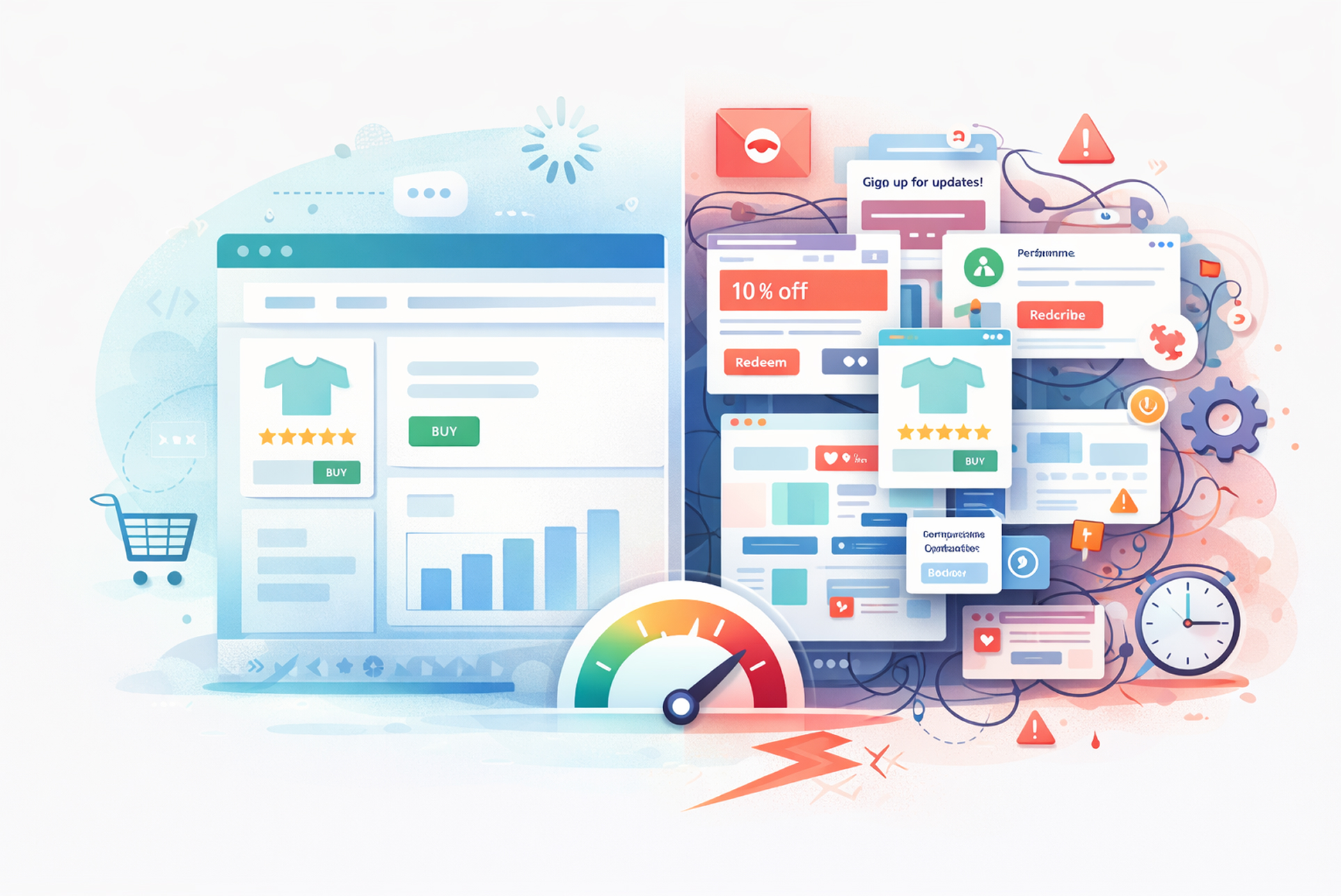
Headless commerce separates those two layers. In a headless Shopify implementation, the backend commerce engine continues to do everything it does managing products, processing orders, handling payments, and maintaining customer data but it no longer renders the storefront directly. Instead, it exposes its data and functionality through APIs. A separate frontend application, built independently using modern web development frameworks, calls those APIs to retrieve product information, pricing, inventory status, and cart data, and renders the customer experience entirely outside of Shopify’s native theme system.
The practical consequence of this separation is that the frontend has no constraints imposed by Shopify’s theme architecture. Every aspect of the customer experience page structure, loading behavior, interaction design, content presentation, and delivery across different devices and channels is fully controllable by the development team building the frontend application. That degree of control is powerful. It is also expensive to build, complex to maintain, and unnecessary for businesses that do not require it.
The Business Problems Headless Commerce Actually Solves
Headless commerce exists because traditional coupled architectures have real limitations at a certain level of scale and complexity. Understanding those limitations is the clearest path to understanding whether headless commerce belongs in your business.
The most frequently cited advantage is performance. Shopify’s native themes are genuinely performant, particularly with the Online Store 2.0 architecture. For most businesses, a well-built and properly optimized Shopify theme delivers page load performance that is commercially adequate and technically sound. But there is a ceiling to what theme-based optimization can achieve, and for businesses operating at high transaction volumes where conversion rate is highly sensitive to page speed where shaving two hundred milliseconds off time-to-interactive translates to measurable revenue improvement the ability to engineer a frontend with complete control over every performance variable is genuinely valuable.
Multi-channel commerce is a second substantive use case. A conventional Shopify theme renders a web storefront. A headless frontend can deliver the same commerce backend’s product catalog, pricing logic, and cart functionality to a web store, a native mobile application, an in-store kiosk, or any other customer touchpoint simultaneously. For businesses genuinely operating across multiple channels where maintaining separate product and inventory management systems for each channel creates significant operational overhead the architectural unification that headless enables has real commercial value.
Content complexity is a third driver. Some businesses operate at the intersection of editorial publishing and commerce in ways that Shopify’s built-in content tools cannot fully accommodate. Brands with sophisticated content marketing strategies, media companies that sell products, or retailers whose customer acquisition is driven primarily by editorial content often find that connecting a purpose-built headless CMS Contentful, Sanity, or similar to Shopify’s commerce backend delivers a content management and delivery capability that no theme-based approach can replicate.
Finally, there are businesses whose competitive differentiation is embedded in the customer experience itself in a purchasing flow, a personalization engine, a configurator, or an interaction pattern that is proprietary and central to the brand. For these businesses, the constraints of any theme architecture are a strategic limitation. Headless removes those constraints entirely.
What Headless Commerce Costs: An Honest Assessment
The commercial case for headless commerce cannot be evaluated without an equally clear assessment of its costs. Those costs are substantial, and they are not always presented prominently by the agencies and platform providers who stand to benefit from headless project engagements.
The development investment required to build a headless Shopify storefront is categorically different from the investment required to build a theme-based one. A well-executed Shopify theme project, delivered through experienced Shopify development services, might take weeks and cost a fraction of what a headless implementation requires. A headless project is a full software development engagement designing an application architecture, building API integrations, implementing caching and performance infrastructure, managing deployment and hosting pipelines, and creating a system that can be maintained and evolved by a competent engineering team. For most businesses, this represents a six-figure investment before the first real customer transaction occurs on the new architecture.
The ongoing maintenance commitment is equally significant. A headless frontend is a software application that requires software engineering to maintain. When Shopify updates its Storefront API which it does, regularly the frontend application needs to be updated to accommodate those changes. When new commerce functionality is required, it needs to be engineered into the frontend rather than enabled through a theme setting or an app installation. The team, whether internal or external, required to support a headless Shopify store is more specialized and commands higher rates than the team required to support a theme-based store. The operational cost difference is real and sustained.
Time to market carries cost implications as well. A theme-based Shopify store can be launched in weeks. A headless implementation of equivalent functionality takes months. In competitive markets where speed of commercial iteration matters, the headless development timeline is a constraint that must be weighed against the architectural benefits it delivers. For a business that needs to respond quickly to market conditions, launching a refined theme-based store faster may generate more commercial value than launching a headless store later.
Shopify’s Own Headless Infrastructure
Shopify has invested seriously in making its platform headless-ready, and understanding that infrastructure is relevant for any business genuinely evaluating the architecture.
The Storefront API is Shopify’s primary mechanism for headless commerce. It provides programmatic access to the full commerce layer products, collections, cart operations, checkout flows, and customer account management in a form that any frontend application can consume. It is well-documented, actively maintained, and used by thousands of headless Shopify implementations globally.
Shopify Hydrogen is the company’s own React-based framework specifically designed for building headless Shopify storefronts. Oxygen is its accompanying hosting infrastructure. Together, they represent a complete first-party headless stack that reduces the architectural decisions required to begin a headless project, provides Shopify-optimized components and caching patterns out of the box, and is maintained by Shopify’s engineering team meaning it evolves in step with Shopify’s API changes without requiring custom maintenance to stay current.
For businesses working with professional Shopify development services partners who have Hydrogen experience, this first-party stack represents a more accessible path to headless than building a custom framework integration from scratch. The existence of Hydrogen does not reduce the overall investment required for a headless implementation, but it does reduce the architectural complexity of the early stages and provides a more maintainable foundation for the long term.
Third-party headless CMS platforms have similarly mature Shopify integrations. Contentful, Sanity, and Builder.io each have documented, actively maintained integration patterns with Shopify’s APIs, which reduces the integration engineering burden for businesses whose primary headless motivation is content management capability.
How to Assess Your Own Situation
The decision about whether to pursue headless commerce should be driven by a specific assessment of your business’s actual circumstances, not by the appeal of the architecture in the abstract. Several honest questions will clarify the analysis.
What does your current performance data show? Measure your store’s Core Web Vitals using Google PageSpeed Insights before assuming that performance is the problem headless needs to solve. If your scores are strong, performance is not the driver. If your scores are poor, the first question is whether theme optimization can address the gap because in many cases it can, at a fraction of the cost of a headless rebuild.
Are you genuinely operating across multiple commerce channels that a unified API backend would serve? Or do you operate primarily through a single web storefront? If the latter, the multi-channel argument for headless does not apply to your business today.
Does your content strategy require editorial and publishing capabilities that materially exceed what Shopify’s native tools provide? If your store is product-forward with standard content requirements, a headless CMS integration is not warranted. If your business is fundamentally content-driven in ways that a dedicated CMS would serve significantly better, the case strengthens.
Do you have access to the sustained development capability required to build and maintain a headless architecture? This is not a one-time project. It is a long-term commitment to engineering investment. Businesses that pursue headless without that commitment in place routinely find themselves with a system they cannot maintain effectively which is a worse outcome than the theme-based store they started from.
For businesses that have previously operated on WooCommerce and are evaluating Shopify as a destination platform, it is worth noting that the architectural flexibility many businesses sought through WooCommerce customization can sometimes be more cleanly achieved through a headless Shopify implementation. The open-source extensibility of WooCommerce and the API-driven flexibility of Shopify headless address some of the same business requirements through fundamentally different mechanisms. If your history includes significant investment in custom WooCommerce functionality, understanding whether that functionality can be replicated in a standard Shopify theme or whether it genuinely requires a headless architecture is an important early step in migration planning.
The Principle That Should Guide the Decision
Every architectural decision should be evaluated by the same principle: does this approach solve a problem my business actually has, and does the benefit justify the investment required to realize it?
For a business with genuine performance constraints at high transaction volume, multi-channel commerce complexity, sophisticated content requirements, or proprietary experience differentiation headless commerce solves real problems and the investment is commercially justified. Engaging experienced Shopify development services to execute that architecture correctly is the path to realizing those benefits without the project risks that come from underestimating its complexity.
For a business whose current store performs adequately, operates on a single channel, and has standard content requirements, headless commerce adds cost and complexity without a commensurate commercial return. A well-built, performance-optimized, thoughtfully maintained theme-based Shopify store will serve that business better and at a fraction of the operational cost than a headless implementation that was adopted for its sophistication rather than its relevance.
The businesses that consistently perform best are those that match their technical approach to their actual requirements. Headless commerce is a powerful and legitimate architectural tool. Its value lies entirely in its appropriate application.
Conclusion: Architecture Should Follow Strategy, Not Precede It
Headless commerce is a powerful tool in the right hands, applied to the right problem. For businesses with genuine performance ceilings, multi-channel complexity, or proprietary experience requirements, the investment is justified and the returns are measurable. For those without those specific pressures, a well-built theme-based Shopify store remains the smarter, leaner, faster choice. The question was never whether headless commerce works. It does. The question is whether your business needs what it provides and that answer deserves an honest assessment before a single development dollar is committed.
If You Are Weighing This Decision and Want a Clear, Commercially Grounded Perspective on What Your Store Actually Needs, Our Shopify Development ServicesTeam Is Ready to Help You Assess the Options Without Agenda. Let’s Talk.